

Views: 88 Author: Site Editor Publish Time: 2026-04-03 Origin: Site


A carpet tile may look right in a sample book and still be the wrong choice for a real project. In commercial flooring, appearance is only one part of the decision, while durability, fire performance, emissions, material structure, and installation fit often have greater impact on long-term results.
This is where carpet tile selection becomes more technical than many buyers expect. Beyond color and pattern, product properties, certificates, and classifications all affect whether the flooring will perform well in offices, hospitality spaces, education projects, residential interiors, and other environments.
In this article, we will discuss the key factors behind carpet tile selection, from materials and construction to certification and practical use. We will also compare carpet tiles, broadloom carpet, and SPC flooring from a project-use perspective, so the final choice is based on real application needs rather than appearance alone.
● Check certifications, classifications, and technical properties together instead of judging carpet tiles by appearance alone.
● Review fire performance, smoke behavior, and indoor air quality before moving a product into specification.
● Match fiber, backing, thickness, and tile size to the traffic level and function of each space.
● Compare carpet tiles, broadloom carpet, and SPC flooring by application area, not by product category only.
● Use supplier documentation to confirm whether the tested product matches the product being quoted.
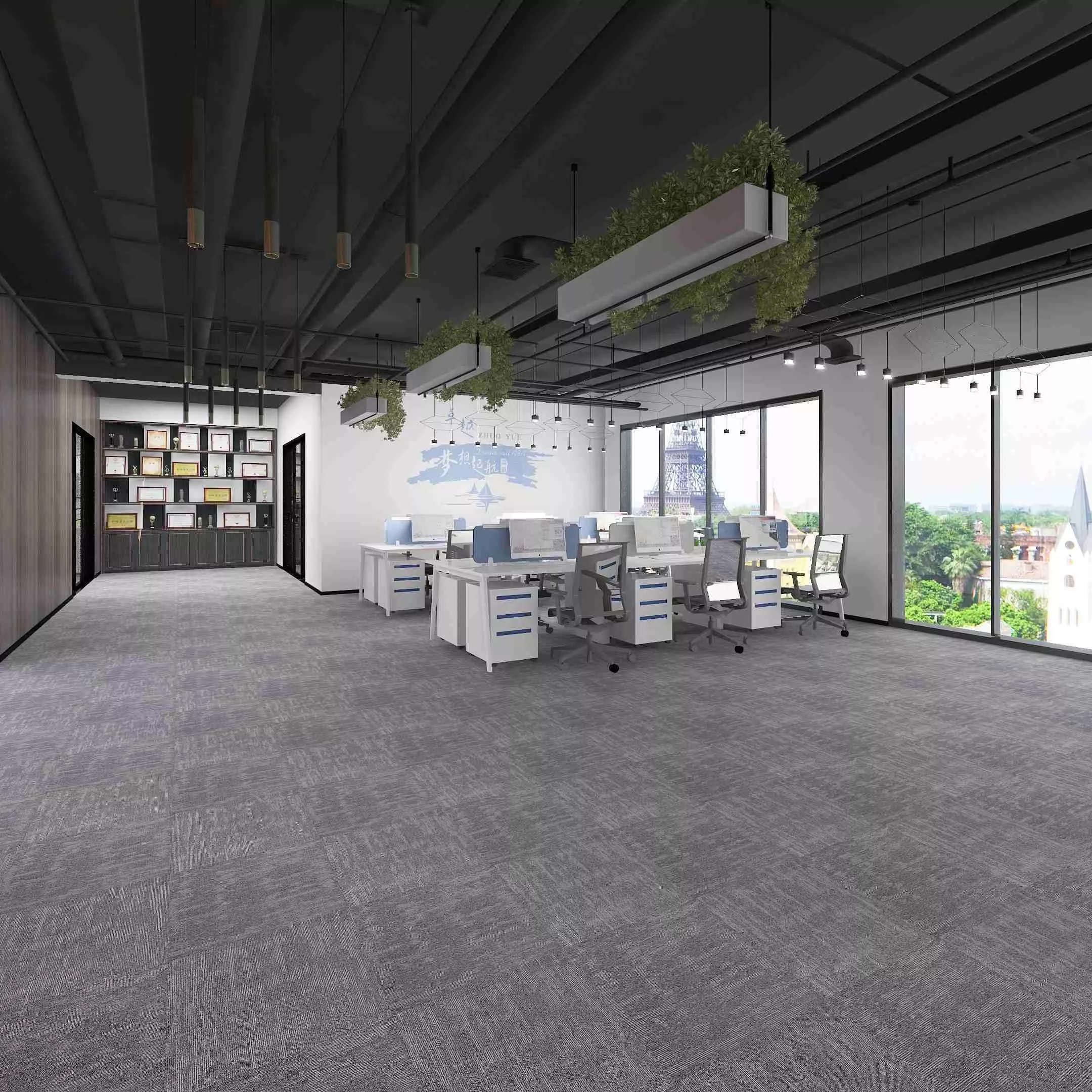
Certifications and classifications make carpet tiles easier to evaluate in real projects. They show whether the product has been tested for fire, smoke, or indoor air emissions. In commercial flooring, these points often affect approval and specification. Without them, comparison is less reliable.
The exact standards depend on the market and project type. In most cases, buyers focus on fire performance, smoke behavior, and indoor air quality. Examples include ASTM D2859 and ASTM E662. These standards are more useful than general quality claims because they are based on defined test methods.
Fire documentation is often one of the first checks in commercial projects. Indoor air quality matters more in offices, schools, hotels, and other enclosed interiors. Environmental certification is also important in projects that pay closer attention to healthier materials. When these documents are reviewed together, product selection becomes clearer.
A specification sheet should be read as a complete product summary. Buyers should check fiber, pile form, backing, thickness, tile size, application, and test references together. Carpet tiles made from synthetic fibers can still differ greatly in real performance. Similar-looking products may behave very differently after installation.
Classification connects the product to the actual use area. A carpet tile for a private office does not need the same performance level as one for a lobby or corridor. Even good test data has limited value if it does not match the real traffic level. In most projects, usage should be checked before design preference.
Many buyers review samples before reading technical documents. Another common mistake is comparing carpet tile only against other carpet tiles. In real projects, some areas may be better suited to broadloom carpet or SPC flooring. Early comparison across product types usually leads to a more practical flooring plan.
Fiber type affects wear resistance, stain behavior, and appearance retention. Synthetic fiber carpet tiles are widely used because they are practical and easy to maintain. Common options include PP-Bitumen, PP-PVC, PET-PVC, Nylon-PVC, and Nylon-PE. Thickness usually ranges from 5 mm to 10 mm depending on project needs.
Durability is one of the main reasons carpet tiles are used in commercial spaces. High-traffic areas need products that keep their appearance under daily use. Loop pile structures are common because they usually perform well over time. The right combination of fiber, pile form, and backing improves long-term results.
Backing affects stability, installation, underfoot feel, and replacement ease. Different backing combinations can suit different project conditions. In modular flooring, a stable backing improves alignment and reduces movement. This is especially important in large areas or phased renovations.
Carpet tiles should be judged by long-term use, not only purchase price. Stain resistance and easy cleaning are important in busy interiors. Their modular format also makes replacement easier when damage happens in one section. This can reduce maintenance disruption over time.
Tile size affects both installation and design freedom. Standard sizes such as 50 cm x 50 cm, 61 cm x 61 cm, and 100 cm x 33.33 cm support different layout needs. Modular sizing also makes it easier to create zones or pattern changes. This gives carpet tiles strong flexibility in both commercial and residential spaces.
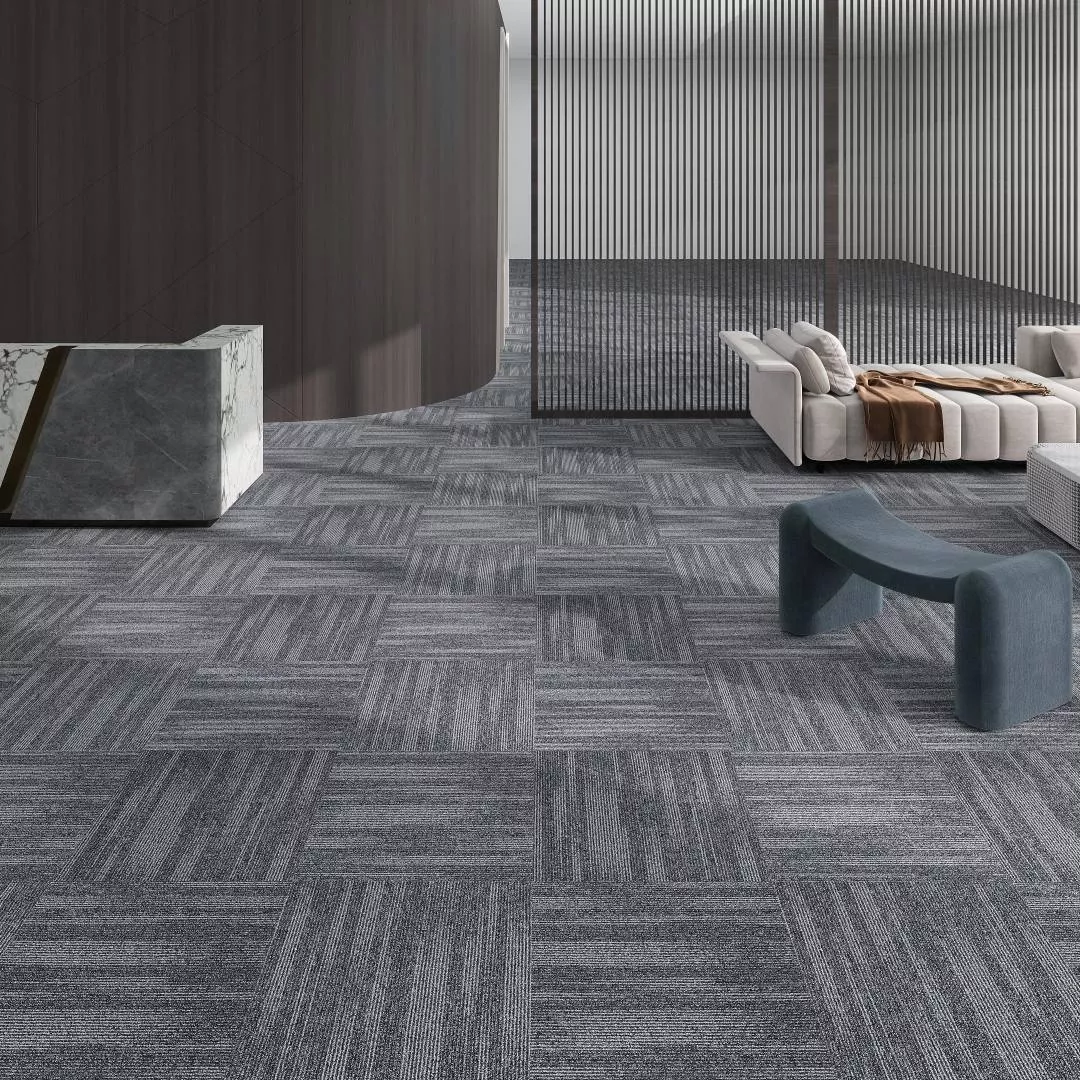
Carpet tiles usually reduce footfall noise better than hard flooring. In offices, schools, and shared spaces, this can create a calmer interior. Acoustic performance depends on structure, backing, and site conditions. That is why carpet tile is often used in work areas.
Carpet tiles usually feel warmer underfoot than rigid floors. This can improve comfort in meeting rooms, offices, and other occupied interiors. They do not replace building insulation, but they can improve surface comfort. This makes the space feel softer and less cold.
Underfoot comfort matters in spaces used for long periods. Hard flooring may be practical, but it can feel too rigid in some settings. Carpet tiles offer a balance between comfort and maintenance. This is one reason they remain common in offices and mixed-use interiors.
Broadloom carpet can create a softer acoustic effect in large continuous spaces. Hotels, guest rooms, lounges, and similar interiors often benefit from this format. In some cases, it suits the space better than modular tile. The choice should depend on function and atmosphere.
SPC flooring works well where water resistance and easy cleaning are priorities. Carpet tile is usually better for acoustic control and underfoot softness. In sound-sensitive spaces, a mixed flooring plan often works best. This is why many projects compare both materials together.
The right choice between carpet tiles, broadloom carpet, and SPC flooring becomes clearer once the space type is defined. Carpet tiles suit offices, homes, classrooms, and high-traffic areas because they offer easy installation, stain resistance, design flexibility, and modular replacement. Broadloom carpet is often better for hotels, lounges, or premium rooms where a continuous visual effect is preferred. SPC flooring is usually more suitable for service zones, pantries, reception transitions, and moisture-prone areas that need stronger rigid-surface performance.
The comparison below gives a simple view of how these flooring types are typically used.
Flooring type | Typical use | Main strengths | Selection note |
Carpet tiles | Offices, homes, education spaces, high-traffic interiors | Easy installation, stain resistance, design flexibility, modular replacement | Suitable for projects that need both function and visual variety |
Broadloom carpet | Hotels, lounges, corridors, premium rooms | Continuous appearance, soft finish, stronger visual flow | Better suited to spaces where seamless flooring is preferred |
SPC flooring | Utility zones, pantries, entrance areas, reception transitions | Water resistance, easy cleaning, rigid surface durability | More suitable where practical performance is the main priority |
Understanding carpet tiles properties, certificates and classifications leads to stronger flooring decisions and more accurate project specifications. The most reliable selection process starts from space type, then moves to fiber, backing, thickness, tile size, classification, fire performance, smoke behavior, and indoor air quality before final design choices are locked in. LKHY Carpet stands out as a China-based manufacturer offering carpet tiles, broadloom carpet, and SPC flooring, supported by a wide choice of material systems such as PP-Bitumen, PP-PVC, PET-PVC, Nylon-PVC, and Nylon-PE. For commercial and residential buyers, that means access to flooring solutions that combine design flexibility, practical maintenance, long-term durability, and the technical documentation needed for more precise product selection.
That depends on project location and building type, but fire testing, smoke behavior, and indoor air quality are often central. Examples in this category include ASTM D2859 and ASTM E662, along with product-specific indoor air quality certification such as Green Label Plus. The exact requirement should always match the intended market and application.
Fiber type, pile construction, backing, thickness, tile size, installation conditions, and relevant test documents usually matter most. None of these should be reviewed alone because the flooring works as one system. A suitable carpet tile is one that fits the space rather than one that appears strongest on a single data point.
Yes. In many interiors, carpet tiles reduce footfall noise and soften reflected sound more effectively than rigid flooring. The final result depends on construction and backing. In some large continuous areas, broadloom carpet may provide an even softer acoustic effect.
They can be, but the claim should be supported by actual documentation. Product-specific indoor air quality certification is more useful than a general environmental statement without testing support. Buyers should always confirm that the certificate applies to the exact product being quoted.


