

Views: 0 Author: Site Editor Publish Time: 2026-04-17 Origin: Site


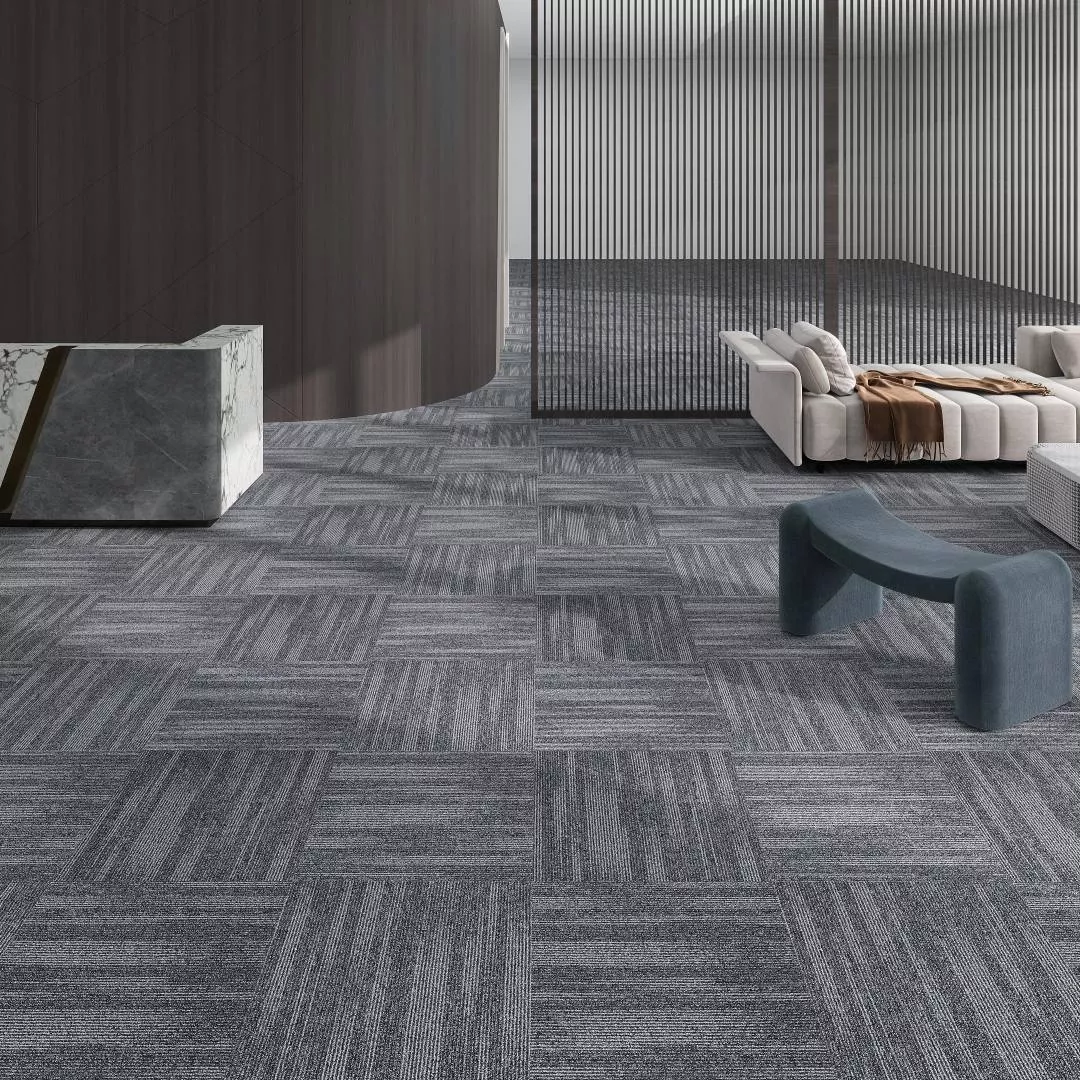
For modern commercial fit-outs, modular flooring has already won the debate against broadloom. But procurement teams and facility managers face a new bottleneck. They must choose the right layout format. The decision between traditional 50x50cm squares and rectangular carpet planks involves more than just basic aesthetics. It actively impacts installation waste, spatial perception, and long-term lifecycle maintenance.
Facility planners cannot afford to guess when outfitting hundreds of square meters. Your chosen shape dictates how the flooring handles visual traffic, seam stress, and modular replacements. This guide breaks down the structural differences, layout capabilities, and cost implications of both formats. We will explore how different shapes influence interior architecture and daily functionality. Ultimately, this breakdown will help you specify the right Commercial Carpet Tiles for your upcoming commercial project.
Format Baseline: Both 50x50 squares and planks offer the same core acoustic and durability benefits; the primary differences are geometric flexibility and visual flow.
Design Application: Planks (typically 25x100cm) excel in wayfinding and complex patterns (herringbone), while 50x50 tiles are optimal for rapid deployment in large, open-plan spaces.
Waste Management: Both modular formats maintain an exceptionally low installation waste rate (1–3%) compared to broadloom (5–25%), though complex plank patterns may slightly increase off-cut volume.
Performance Parity: Evaluating either format requires looking past the shape to the specs: demand Nylon 6,6 fiber, CRI Class II/III ratings, and dedicated acoustic backings.
Let us establish the baseline geometric differences. You will primarily encounter two distinct shapes when sourcing modular soft flooring for your facility. Understanding their physical dimensions helps you visualize their ultimate impact on your space.
Industry veterans often refer to these as standard carpet squares. They measure exactly 50 by 50 centimeters. This translates to roughly 19.7 by 19.7 inches. They proudly serve as the commercial flooring industry default. They offer a highly predictable, symmetrical grid. Installers find them incredibly efficient to store, transport, and install across massive floorplates. Because they represent the traditional standard, manufacturers produce them in the highest volumes. This deep availability makes them a staple for rapid-deployment projects.
Planks bring a different geometric approach. They typically measure 25 by 100 centimeters. This equals approximately 9.85 by 39.4 inches. Planks purposefully mimic the exact aspect ratio of hard surface flooring. Think of luxury vinyl planks (LVP) or traditional architectural hardwood. They beautifully bridge the gap between soft acoustic comfort and linear design trends. Designers increasingly favor them for contemporary corporate environments.
You must note one crucial reality. Format does not dictate inherent quality. Both shapes share identical tufting densities. They utilize the exact same backing systems. They feature matching pile heights when sourced from the same commercial product line. A square tile and a plank tile from the same collection perform identically under foot traffic.
Feature | 50x50 Squares | Planks (25x100cm) |
|---|---|---|
Visual Grid | Symmetrical, geometric, predictable | Linear, elongated, directional |
Aspect Ratio match | Raised access floor panels | Hardwood, Luxury Vinyl Planks (LVP) |
Inherent Quality | Identical to collection specs | Identical to collection specs |
Handling Convenience | Highly compact square boxes | Elongated rectangular boxes |
Designers love modular formats because they unlock immense creative potential. Your layout choice dramatically shifts how occupants perceive the size and flow of a room. Let us examine how each shape influences interior design.
Squares excel in straightforward, grounded applications. They provide a sturdy visual foundation. Installers typically utilize three primary layout methods for squares:
Monolithic: Every tile faces the exact same direction. This mimics the seamless look of broadloom.
Quarter-Turn: Installers rotate every alternating tile by 90 degrees. This creates a highly durable, classic checkerboard effect. It hides daily wear brilliantly.
Brick or Ashlar: Installers stagger the joints horizontally or vertically. This breaks up long seams and minimizes visual tracking.
Outcome: The 50x50 format creates a grounded, uniform visual base. It quietly supports the room. It rarely competes against other interior architectural elements or bold furniture choices.
Rectangles unlock advanced geometric configurations. They introduce energy and movement into static spaces. Installers can lay them in several dynamic patterns:
Herringbone: Tiles interlock at 90-degree angles. This creates a high-end, zigzag pattern commonly seen in luxury spaces.
Basketweave: Installers group planks into alternating blocks. This mimics woven textiles.
Half-Drop: Planks stagger exactly halfway down the adjacent tile. This emphasizes the linear nature of the floor.
Outcome: Planks work exceptionally well for passive "wayfinding". They naturally guide foot traffic down long corridors. They also create directional flow in narrow, poorly lit rooms. You can easily mix them alongside hard LVP planks of identical dimensions. This clever technique creates seamless hard-to-soft zone transitions without requiring clumsy metal transition strips.
Facility managers care deeply about installation speed and material waste. Every discarded off-cut represents wasted budget. Every hour of installation represents operational downtime. Both shapes deliver strong results here, but they behave differently at the margins.
You must reiterate a core financial benefit. Both formats of Commercial Carpet Tiles drastically outperform traditional wall-to-wall broadloom. Broadloom heavily suffers from 5-25% installation waste. Installers must order large rolls and cut massive chunks away to fit room contours. Modular formats require very little trimming. Installers simply drop them in place and only trim the final perimeter tiles.
Buyers must proactively watch out for pattern-specific overage. Standard 50x50 tiles behave wonderfully in square rooms. You easily calculate standard square footage plus a tiny margin. However, planks introduce new variables. Choosing a complex Herringbone plank layout actively increases your cutting waste around the room's perimeter. Assessors must calculate required overage based on the specific pattern geometry, not just the raw floor space.
Both shapes allow for highly efficient, phased weekend installations. Professional installers frequently use pressure-sensitive adhesives. They also utilize advanced loose-lay traction systems. These systems allow crews to lift modular office desks temporarily, swap the flooring underneath, and replace the desk immediately. Businesses avoid shutting down their entire operations.
You must strictly follow site acclimatization protocols. This non-negotiable step prevents catastrophic failures.
Deliver the boxed tiles to the final installation environment.
Ensure the building's HVAC system runs at normal operational temperatures.
Let the boxes sit completely undisturbed for 24 to 48 hours.
Only begin installation after the materials reach ambient room temperature.
Skipping this vital step causes rapid thermal expansion or contraction after installation. This amateur mistake leads directly to peaked seams. The backing pushes against adjacent tiles and forces the edges upward. This specific risk appears slightly more visible along the long, continuous edges of plank formats.
You cannot make a credible purchasing decision based on shape alone. A poorly manufactured plank will fail just as quickly as a poorly manufactured square. Guide your procurement team to evaluate non-negotiable performance data. These core metrics define the true lifespan of your flooring investment.
Always prioritize Solution-Dyed Nylon 6,6. It stands uncontested as the commercial industry gold standard. The unique molecular structure of Nylon 6,6 heavily resists crushing under heavy rolling traffic. "Solution-Dyed" means the manufacturer bakes the color directly into the liquid polymer before extruding the fiber. The color runs all the way through the strand. It resists harsh chemical cleaners and heavy UV exposure.
Open-plan offices suffer from terrible noise pollution. You must pay close attention to documented acoustic ratings. Look for NRC (Noise Reduction Coefficient) ratings between 0.15 and 0.35. This metric measures how much airborne sound the carpet absorbs. Additionally, specify cushion-backed tiles over hard-backed tiles. Cushioning maximizes IIC (Impact Insulation Class) scores. High IIC scores prevent heavy footsteps from echoing into the lower floors of multi-story office buildings.
Ensure the product strictly meets recognized CRI (Carpet and Rug Institute) standards. Class II handles medium commercial spaces and standard open offices comfortably. Class III supports heavy commercial areas like bustling corporate lobbies and main corridors. Furthermore, check the face weight. The face weight measures the amount of yarn per square yard. It should typically exceed 18oz for standard high-traffic commercial zones.
Performance Metric | Recommended Standard | Why It Matters |
|---|---|---|
Fiber Type | Solution-Dyed Nylon 6,6 | Prevents crushing from chairs; color will not fade. |
NRC Rating | 0.15 – 0.35 | Absorbs ambient office chatter and ringing phones. |
CRI Rating | Class II or Class III | Certifies the product for medium to heavy foot traffic. |
Face Weight | 18oz or higher | Ensures adequate yarn density to prevent rapid bald spots. |
Every single space inside your building demands a unique flooring strategy. You do not need to use the exact same shape everywhere. We mapped out the ideal format for standard commercial zones based on decades of field data.
Verdict: Tie, with a slight edge to 50x50.
These standard squares install much faster over standard raised access floors. The 50x50 dimensions often align perfectly with the metal floor panels underneath. This alignment makes future under-floor cable maintenance incredibly easy. Furthermore, Quarter-Turn layouts hide daily wear and isolated soiling exceptionally well under rolling desk chairs.
Verdict: Strong edge to Planks.
The linear, elongated nature of planks naturally directs heavy traffic. Designers can easily alternate plank colors to create explicit visual "pathways". This guides visitors directly toward reception desks or elevators. It achieves this custom look without needing any expensive, labor-intensive custom cuts.
Verdict: Edge to Planks (Specifically Herringbone).
Boardrooms require an elevated aesthetic. Planks laid in a Herringbone pattern provide a high-end, bespoke visual. They successfully mimic the luxurious feel of custom woven rugs or premium architectural wood flooring. At the same time, they maintain the excellent acoustic control necessary for confidential meetings and clear conference calls.
Verdict: Edge to 50x50.
Manufacturers produce standard neutral colors in massive 50x50 production runs. Distributors stock them more deeply in local warehouses. You rarely wait for international shipping. They consistently offer the lowest material cost. They also deliver the absolute lowest labor cost for straightforward, rapid installation.
The choice between 50x50 squares and planks fundamentally represents a design and spatial strategy decision. It is never a performance compromise. Both formats offer incredible durability, provided you strictly verify the underlying fiber and backing specifications.
Use 50x50 modular squares for maximum layout efficiency. They deliver supreme budget control and rapid deployment in massive, open zones. Opt for rectangular planks when your project requires specific spatial flow. Planks excel at passive wayfinding and delivering elevated geometric aesthetics in premium spaces.
We highly advise procurement teams to take one final action. Request physical samples of both formats before finalizing your order. Test the seam visibility directly under your actual office lighting. Check the acoustic backing thickness alongside your current rolling office furniture to ensure perfect compatibility.
A: Labor costs generally remain identical for basic layouts like ashlar or brick. Both shapes drop into place easily. However, complex plank patterns like herringbone require much more precise cutting at the room edges. This specific complexity can increase labor time and installation waste by a small margin.
A: Yes, you absolutely can mix them. They just need to share the exact same pile height and backing system. Sourcing from the identical manufacturer ensures this compatibility. Mixing formats currently stands as an emerging trend for cleverly zoning breakout areas within open-plan offices.
A: Format shape does not dictate rolling resistance at all. Pile construction controls this vital factor. Both 50x50 and plank shapes are highly suitable for caster wheels. Just ensure you specify a low-pile, high-density loop construction to provide a smooth, frictionless surface for mobility.


