

CE
LKHY


Choosing the right carpet for a commercial project involves more than color and appearance. Buyers also need to consider carpet construction, fiber type, backing, installation requirements, maintenance, and overall project costs.
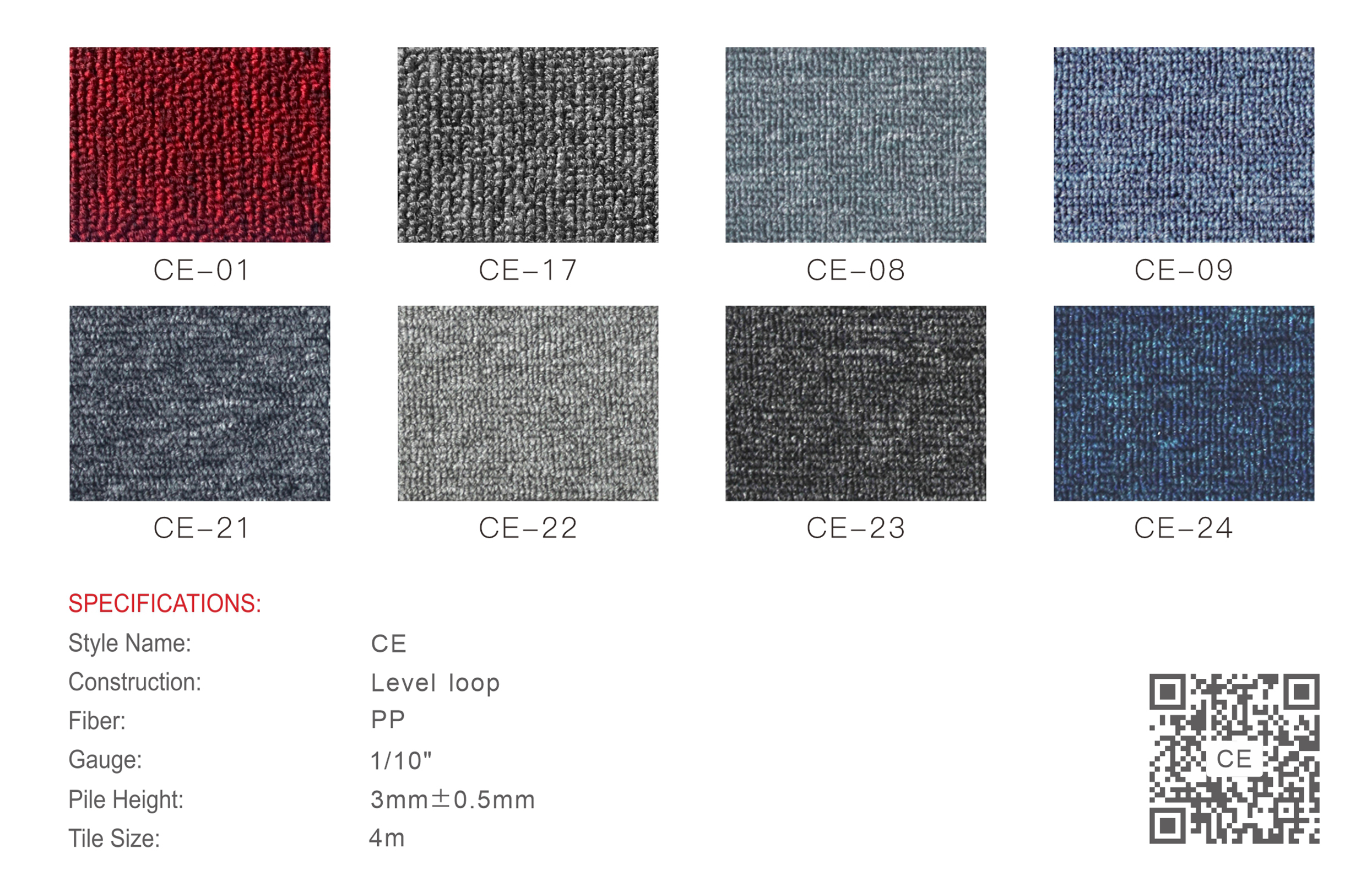
This PP wall-to-wall carpet features a level loop construction made from polypropylene (PP) fiber, with a 1/10" gauge and ACTION backing. Its pile height is approximately 3 mm, providing a consistent surface profile for interior flooring applications where continuous carpet coverage is preferred.
With a width of 4 meters, this broadloom carpet is worth considering for flooring distributors, carpet wholesalers, hotel procurement teams, interior contractors, and commercial flooring suppliers seeking roll carpet for their product ranges or project requirements.
Unlike carpet tiles, which are supplied as individual modular pieces, wall-to-wall carpet is supplied in rolls and cut to fit the installation area. It can be evaluated for hotels, offices, meeting rooms, residential developments, and other indoor spaces where a continuous carpet finish is desired.
| Parameter | Specification |
|---|---|
| Style Name | CE |
| Product Type | PP Wall-to-Wall Carpet |
| Construction | Level Loop |
| Fiber Material | Polypropylene (PP) |
| Gauge | 1/10" |
| Backing | ACTION |
| Pile Height | 3 ± 0.5 mm |
| Carpet Width | 4 m |
| Supply Format | Broadloom Carpet Roll |
With a width of 4 meters, this PP carpet roll offers a practical option to evaluate for larger interior spaces. Depending on the room dimensions and installation layout, wider carpet rolls may help reduce the number of seams compared with narrower sections.
For hotel rooms, office interiors, conference areas, and residential developments, project planners can assess the roll width against the floor layout to estimate material requirements and cutting waste before installation.
The level loop construction features loops of a relatively consistent height, creating a uniform carpet surface. This structure is worth considering for commercial and residential interiors where a simple, consistent texture is preferred.
For projects with heavy foot traffic, buyers should assess the complete carpet construction, expected usage, maintenance requirements, and relevant performance specifications before making a final selection.
Polypropylene, commonly known as PP, is a synthetic fiber widely used in carpet manufacturing. It gives buyers another option when comparing carpet materials based on application, appearance, budget, and product specifications.
When comparing PP carpet with nylon carpet or polyester carpet, procurement teams should consider the requirements of the specific project rather than selecting a product based on fiber type alone.
This product uses ACTION backing as specified in its technical details. The backing is part of the carpet's overall construction and should be assessed alongside the subfloor, installation method, and project requirements.
Before installation, contractors should confirm the appropriate adhesive or installation system, subfloor preparation requirements, and any applicable local building regulations.
For carpet importers, distributors, wholesalers, and flooring contractors, purchasing decisions involve more than the unit price. Carpet width, cutting plans, shipping arrangements, installation labor, and future maintenance can all affect the overall project budget.
LKHY welcomes inquiries from buyers seeking product specifications, sample evaluation, quotations, and supply information for commercial flooring projects.
This PP broadloom carpet can be evaluated for hotel guest rooms, selected corridors, private lounges, and other indoor areas where continuous carpet coverage is preferred.
Final product selection should take into account traffic levels, cleaning routines, design requirements, and applicable fire safety regulations.
For office fit-outs, conference rooms, and meeting spaces, wall-to-wall carpet provides an alternative to hard flooring and modular carpet tiles.
Buyers can compare appearance, installation requirements, acoustic objectives, and maintenance arrangements to determine which flooring format better suits their project.
This carpet can also be considered for bedrooms, living rooms, and other residential interiors where a continuous carpet finish is preferred.
The final selection should reflect the intended use, cleaning expectations, room layout, and desired surface appearance.
Interior contractors and project procurement teams can evaluate this product for suitable indoor flooring schemes.
For cinemas, wedding halls, public buildings, and other specialized venues, buyers should confirm the required fire classification, wear performance, and project-specific compliance requirements before specifying the carpet.
Both broadloom carpet and carpet tiles are used in commercial flooring, but they differ in supply format, installation, and maintenance considerations.
| Comparison | PP Wall-to-Wall Carpet | Carpet Tiles |
|---|---|---|
| Supply Format | Continuous carpet rolls | Individual modular pieces |
| Installation | Cut and fitted to the floor area | Installed piece by piece |
| Appearance | Continuous carpet coverage | Modular layout with tile joints |
| Local Replacement | Repair or replacement may involve a larger section | Individual tiles may be replaceable |
| Material Planning | Roll width, room dimensions, and cutting layout are important | Tile size, layout, and cutting waste are important |
| Purchasing Considerations | Roll quantity, width, backing, and installation method | Tile dimensions, backing, pattern direction, and replacement needs |
For large, relatively open floor areas where a continuous appearance is preferred, broadloom carpet may be worth considering.
For offices and other commercial environments where modular installation and localized replacement are priorities, carpet tiles may offer greater flexibility.
Neither option is automatically the best choice for every project. The right solution depends on building layout, maintenance strategy, installation budget, and technical specifications.
To make product selection and quotation more efficient, buyers should prepare the following information:
Project Application: Hotel, office, residential development, or another indoor space.
Floor Area: Estimated square meterage and detailed room dimensions.
Product Requirements: PP fiber, level loop construction, backing type, pile height, and required carpet width.
Design Requirements: Preferred colors, pattern requirements, and sample approval arrangements.
Installation Conditions: Subfloor type, proposed installation method, and site requirements.
Compliance Requirements: Specified fire tests, environmental documentation, or applicable local building standards.
Delivery Arrangements: Required quantity, destination, shipping terms, and project schedule.
Providing these details helps suppliers evaluate product suitability and prepare a quotation that better matches the project's requirements.
PP wall-to-wall carpet is broadloom carpet made with polypropylene fiber and supplied in rolls for continuous floor coverage.
This CE product features level loop construction, ACTION backing, a 1/10" gauge, and a pile height of 3 ± 0.5 mm.
No. Wall-to-wall carpet is generally supplied in rolls, while carpet tiles are individual modular flooring pieces.
Both are used in commercial interiors, but their installation methods, replacement processes, and material planning requirements differ.
This product can be evaluated for suitable hotel and office interiors. Buyers should verify the expected traffic level, cleaning requirements, fire classification, and other project specifications before confirming suitability.
The supplied specification lists a width of 4 meters. Please contact the supplier to confirm available colors and required roll lengths.
Level loop carpet features loops of a relatively consistent height, creating a uniform surface texture.
Its suitability for a specific project depends on the complete product construction and intended application.
ACTION is the backing type specified for this product. Buyers should confirm the backing construction and compatible installation system with the manufacturer or installer before placing an order.
Start with the total floor area and detailed room dimensions. Then consider roll width, cutting layout, seams, pattern matching where applicable, and installation waste.
For irregularly shaped spaces, calculating quantity based on square meters alone may not accurately reflect the amount of carpet required.
Contact LKHY with your intended application, estimated order quantity, delivery destination, and technical requirements to discuss sample availability, pricing, and supply arrangements.


