

Views: 0 Author: Site Editor Publish Time: 2026-02-04 Origin: Site


Calculating the right number of carpet tiles can be tricky, but getting it right is crucial. Whether renovating or building from scratch, it’s important to avoid wastage and shortages.
In this article, we will guide you through the steps to determine exactly how many carpet tiles you need. From accurate measurements to accounting for waste, we’ll help ensure a seamless flooring installation process.
Carpet tiles are highly versatile and modular, allowing for easy installation in sections. Whether for a small room or large commercial space, they offer customized layouts to suit any area. Carpet tiles are also DIY-friendly, eliminating the need for professional installation, making them cost-effective and quick to install.
Designed to last, carpet tiles can handle high foot traffic, making them ideal for both residential and commercial spaces. If a tile is damaged or stained, it can be replaced individually, saving on costly repairs. Additionally, they are easy to clean and maintain, either by vacuuming or removing tiles for washing.
Available in a wide range of colors, textures, and patterns, carpet tiles offer nearly limitless design possibilities. You can mix and match to create unique patterns that suit any aesthetic, whether for residential or commercial use.
Feature | Key Benefits |
Versatility | Modular design allows for easy sectional installation. |
Durability | Withstands heavy foot traffic; individual tiles can be replaced. |
Design Flexibility | Offers diverse options in colors, textures, and patterns. |
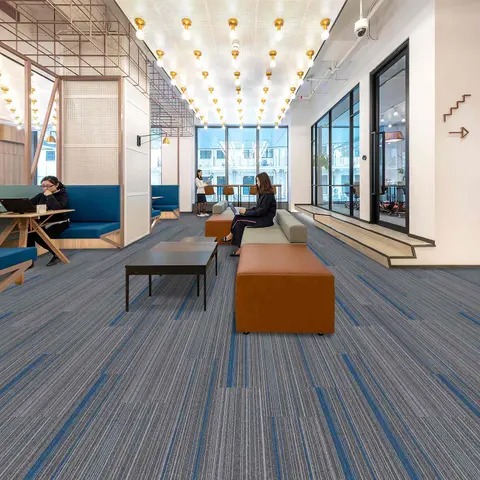
To start, you need to measure the area of the room you plan to cover with carpet tiles. For rectangular rooms, measure the length and width of the space in feet or meters. Then, multiply these two measurements to calculate the total area.
For example, if your room is 10 feet long and 12 feet wide, the area will be:
10 feet x 12 feet = 120 square feet
This simple calculation will give you the total floor area that needs to be covered.
If your room is not a simple rectangle, don’t worry! Irregularly shaped rooms can still be calculated by breaking them down into smaller rectangular sections. Measure each section individually and then add the areas together to get the total floor area.
● Example: If your room has a small alcove, measure the alcove as a separate rectangle and add that area to the main room’s area to get the full total.
Carpet tiles come in a variety of sizes, but the most common size is 50cm x 50cm (about 1.64 feet by 1.64 feet). To calculate how many tiles you need, first determine how much area one tile will cover.
● Example: A 50cm x 50cm tile covers 0.25 square meters or approximately 2.25 square feet. If your room is 120 square feet, you will need:
120 square feet ÷ 2.25 square feet per tile = 53.33 tiles (round up to 54)
If you’re using a different tile size, the calculation method remains the same. Just make sure to calculate the coverage area of each tile and divide your room’s total area by the tile’s coverage area. Larger tiles will require fewer pieces, while smaller tiles will increase the number of tiles needed.
If you're installing tiles in a pattern, like a checkerboard or herringbone design, you may need to adjust the number of tiles required. Certain patterns, such as diagonal layouts, can lead to more waste due to cuts at the edges. Ensure you account for this by adding extra tiles when planning the layout.
When calculating how many tiles you need, it’s essential to add extra tiles for waste, cuts, and future repairs. A standard waste allowance is typically 10-15% for simple, rectangular rooms. For example, if your room’s total area (including waste) is 130 square feet, you might want to add 13-19 additional tiles, depending on the complexity of your layout.
If you have an irregular room shape, or you plan to install tiles diagonally or with a more complex pattern, increase your waste allowance to 15-25%. This ensures you have enough tiles to account for the extra cutting and alignment needed for these layouts.
When buying carpet tiles, it’s safer to round up to ensure you don’t fall short. It’s better to have extra tiles than to run out mid-installation, especially if you have a unique color or pattern that might be difficult to match later.
To calculate the total number of carpet tiles needed, take your room’s total area, add any waste allowance, and divide by the coverage area of one tile.
● Example: If your room is 120 square feet, with 10% waste added, you’ll need:
120 square feet x 1.10 (for waste) = 132 square feet
132 square feet ÷ 2.25 square feet per tile = 58.67 tiles (round up to 59 tiles)
Using the previous example, you would need a total of 59 tiles for a 120-square-foot room with a 10% waste allowance.
The layout you choose for your carpet tiles can impact the number of tiles needed. A monolithic layout, where all tiles are installed in the same direction, generally produces less waste. On the other hand, a staggered layout, where tiles are offset, may result in needing more tiles due to extra cuts.
Layout Type | Characteristics | Tile Requirement |
Monolithic | Tiles installed in the same direction. | Produces less waste. |
Staggered | Tiles are offset from each other. | Requires more tiles due to additional cuts. |
Decorative patterns, like herringbone or checkerboard, often require more tiles due to the complexity of fitting the tiles together to create the design. Always plan ahead for these types of installations to avoid running out of tiles.
When using multiple colors or custom patterns, calculate the number of tiles for each color separately. If you’re mixing and matching tiles to create a bespoke design, this will ensure you have the correct number of each tile color.
For spaces with large furniture or fixed appliances (e.g., built-in cabinets), you may not need to cover every inch of the floor. Measure around fixed features and exclude those areas from your calculations.
Even if you don’t plan to carpet under furniture now, consider covering the entire space to allow for future layout changes. This will provide flexibility for future reconfigurations without worrying about mismatched flooring.
Commercial spaces with heavy machinery or fixed furniture might not require full coverage. Measure carefully and adjust calculations for commercial environments to avoid unnecessary waste.
Ordering extra tiles ensures that you have spares on hand for future replacements. This is especially important for commercial environments or high-traffic areas, where tiles may wear out over time.
Keep any extra tiles in a cool, dry area and protect them from damage. Storing them properly ensures they remain in good condition for when you need them.
If you need to replace tiles later, ensure they match the original batch in terms of color. Dye lots can vary, so it’s important to store a few tiles from the original installation to maintain a consistent appearance.
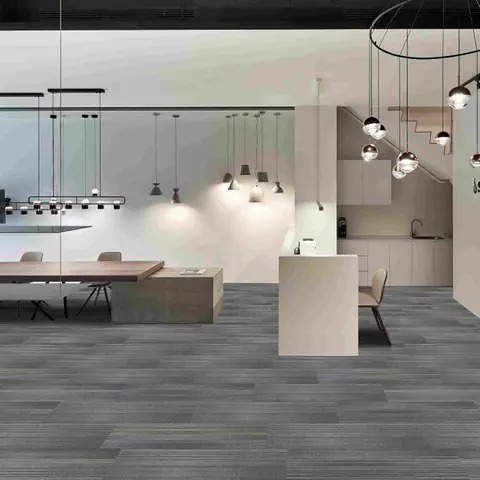
Accurately calculating the number of carpet tiles is essential for a smooth installation. By measuring the room, understanding tile sizes, and accounting for waste, you can confidently purchase the right number of tiles. Carpet tiles are a durable and low-maintenance solution, offering a variety of design options. Planning ahead ensures your flooring project will save time and money. Hubei Linkun Hongyuan Carpet Corp. offers high-quality carpet tiles that are both flexible and easy to maintain, providing excellent value for any project.
A: To calculate carpet tiles, measure your room's length and width, then multiply for the total area. Divide this by the coverage of a single tile and add 10-15% for waste.
A: Measure the room's length and width in feet or meters. For irregular rooms, divide them into smaller sections and calculate each area separately.
A: Accounting for waste ensures you have extra tiles for cuts, future repairs, and unforeseen issues, especially in complex layouts.
A: Break the room into smaller, rectangular sections, calculate the area of each, and add them together to find the total area.
A: Yes, carpet tiles are cost-effective due to their ease of installation, low maintenance, and the ability to replace individual tiles as needed.
A: Yes, carpet tiles are versatile and can be used in both residential and commercial settings, offering durability and customization options.


