

Views: 0 Author: Site Editor Publish Time: 2026-03-20 Origin: Site


Is noise disrupting your comfort at home or work? Poor sound quality affects focus and relaxation. Acoustic carpet tiles offer a smart solution.These tiles absorb sound and reduce echo, unlike regular flooring. They improve room acoustics and create peaceful environments.In this post, you’ll learn what acoustic carpet tiles are, their benefits, and how they enhance sound in any space.
Acoustic carpet tiles play a vital role in enhancing the sound quality of any room. Their design and materials work together to absorb and reduce unwanted noise, creating a more comfortable environment.
Acoustic carpet tiles absorb sound by trapping airborne noise within their fibrous surface. The dense pile and backing materials convert sound waves into small amounts of heat, reducing reflection. This process helps manage common noises such as voices, office equipment, or ambient sounds. The carpet tiles’ structure interrupts sound waves, preventing them from bouncing off hard floors.
Echo and reverberation occur when sound waves reflect repeatedly in a room. Installing acoustic carpet tiles softens these reflections, especially on floors, which are major contributors to reverberation. By absorbing mid to high-frequency sounds, carpet tiles improve speech clarity and reduce distracting background noise. This benefit is particularly valuable in open-plan offices, classrooms, and living areas.
One of the most noticeable advantages of acoustic carpet tiles is their ability to reduce impact noise. Footsteps, chair movements, and dropped objects generate vibrations that travel through floors. Carpet tiles cushion these impacts, significantly lowering noise levels. This feature is essential in multi-level buildings, where noise transmission between floors can disturb occupants.
The backing material of carpet tiles greatly influences their sound absorption abilities. Specialized acoustic backings or bitumen layers add mass and dampen sound transmission. Some carpet tiles come with an acoustic underlay integrated or designed to be used with one, enhancing noise reduction further. The permeability of the backing affects how much sound penetrates and is absorbed.
Acoustic carpet tiles perform well across different environments. In small rooms, they quickly reduce echo, while in larger spaces, they contribute to overall noise management. Rooms with hard surfaces or minimal furnishings benefit most, as carpet tiles compensate for sound reflections. High-traffic areas gain from impact noise reduction, improving occupant comfort.
While acoustic carpet tiles excel at floor-level sound absorption, they are part of a broader acoustic strategy. Wall panels and ceiling treatments address reflected sound from other surfaces. Compared to rugs or broadloom carpet, tiles offer easier installation and maintenance with comparable acoustic benefits. They also allow targeted placement in noise-prone zones.
Proper installation is critical. Gaps between tiles or uneven subfloors can reduce sound absorption. Using compatible carpet tiles acoustic underlay enhances performance. Ensuring tiles fit tightly and the subfloor is clean and level maximizes the noise reduction benefits. Choosing tiles with certified acoustic ratings guarantees expected results.
Choosing the right carpet tiles is crucial to maximize their acoustic benefits. Not all carpet tiles perform equally in sound absorption or impact noise reduction. Understanding key factors like acoustic ratings, material properties, and backing options helps you select tiles that best suit your sound control needs.
Look for carpet tiles with verified acoustic ratings. These ratings often include Impact Insulation Class (IIC) and Noise Reduction Coefficient (NRC) scores. IIC measures how well the tile reduces impact noise such as footsteps, while NRC reflects the tile’s ability to absorb airborne sound. Selecting carpet tiles with higher IIC and NRC values ensures better noise reduction and sound absorption. Certifications from recognized bodies provide assurance of performance and compliance with building standards.
The density and pile height of carpet tiles directly affect their sound absorption capabilities. Denser fibers trap more sound waves, while higher pile height increases the surface area for sound absorption. For acoustic carpet tiles, medium to high pile heights with dense construction are ideal. Loop pile carpets tend to absorb less sound than cut pile options due to their tighter fiber structure. Balancing density and pile height helps achieve effective carpet tiles sound absorption without compromising durability.
Backing materials play a pivotal role in noise reduction. Acoustic carpet tiles often feature bitumen or foam backings that add mass and dampen sound transmission. Some carpet tiles come with integrated acoustic underlays or are designed to be installed over specialized acoustic carpet underlay pads. These underlays enhance impact noise mitigation and improve overall sound insulation. When selecting tiles, consider both the backing type and compatibility with acoustic underlays to maximize performance.
While acoustic performance is vital, appearance and design also matter. Carpet tiles come in various colors, patterns, and textures that complement interior décor. Choose tiles that meet acoustic needs without sacrificing style. Many manufacturers offer noise reducing carpet tiles in modern designs suitable for offices, homes, and hospitality spaces. Selecting visually appealing acoustic carpet squares encourages wider acceptance and integration in noise-sensitive environments.
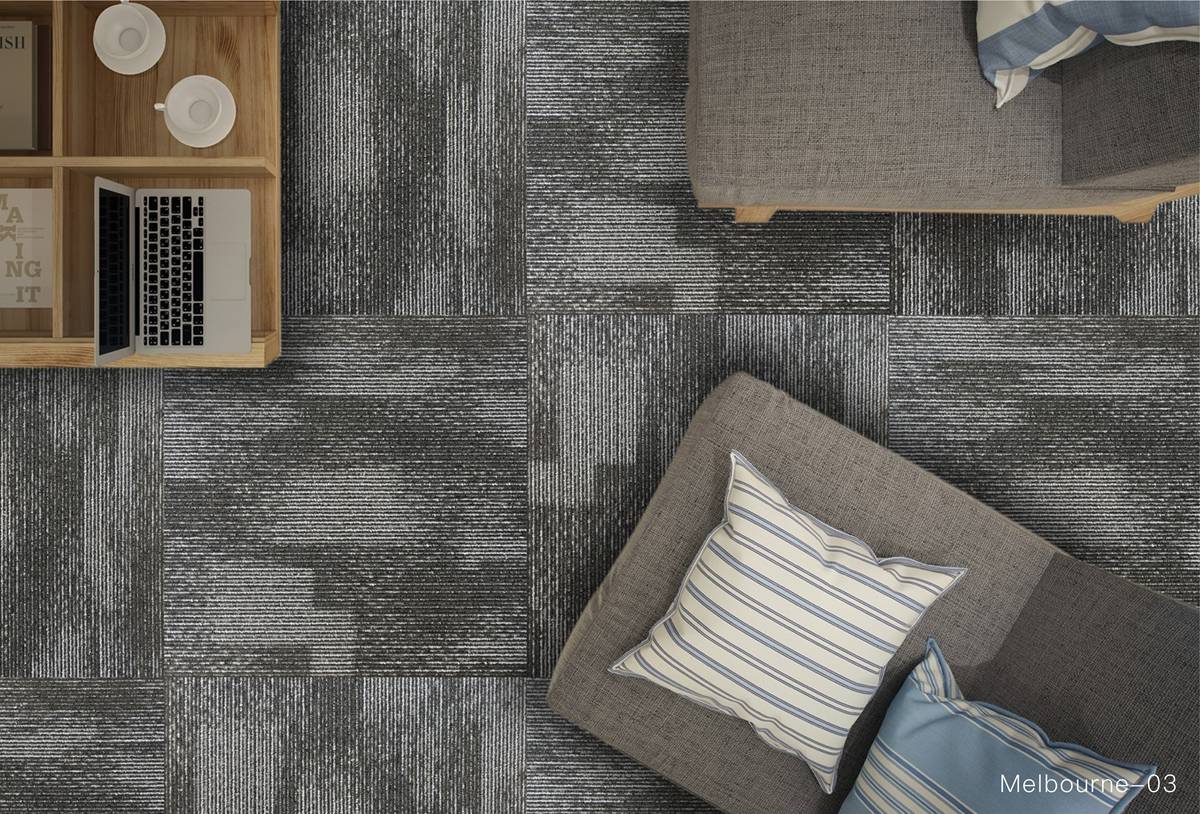
Acoustic carpet tiles are versatile solutions that enhance sound quality across various settings. Their ability to absorb noise and reduce impact sounds makes them ideal for many environments where controlling sound improves comfort and functionality.
Open-plan offices often suffer from excessive noise due to conversations, phone calls, and movement. Acoustic carpet tiles help absorb these sounds, reducing echo and reverberation. This creates a quieter environment, allowing employees to focus better and collaborate effectively without distraction. Additionally, noise reducing carpet tiles minimize the impact noise from footsteps and chair movements, which are common in busy workplaces. Using carpet tiles acoustic underlay further enhances these benefits by adding an extra layer of sound insulation.
In homes, acoustic carpet squares improve comfort by softening footsteps and muffling everyday noises. Bedrooms, hallways, and living rooms benefit from carpet tiles for noise reduction, making spaces more peaceful and relaxing. They are especially useful in apartments or multi-level houses where impact noise, like footsteps or dropped objects, can disturb neighbors or family members below. Selecting soundproof carpet tiles with appropriate backing and underlay helps achieve better sound insulation between floors.
Classrooms and lecture halls demand clear communication. Acoustic floor tiles carpet can reduce background noise and reverberation, enhancing speech clarity. This supports better concentration and learning outcomes. Sound absorbing carpet squares absorb mid to high-frequency sounds, which are crucial for understanding spoken words. Moreover, carpet tiles for sound insulation contribute to a calmer atmosphere, limiting distractions from hallway noise or adjacent rooms.
Hotels and restaurants often face challenges with noise from foot traffic, conversations, and kitchen activities. Noise reducing carpet tiles installed in corridors, lobbies, and dining areas help create a more serene environment. Acoustic carpet tiles for soundproofing reduce impact noise between floors, ensuring guests enjoy restful stays. In dining spaces, carpet tiles sound absorption minimizes echo, improving ambiance and guest comfort. Combining carpet tiles with acoustic underlays maximizes these acoustic benefits.
Proper installation is essential to unlock the full acoustic benefits of carpet tiles. Even the highest quality noise reducing carpet tiles can underperform if installed incorrectly. Following best practices ensures maximum sound absorption, impact noise reduction, and overall durability.
Start by thoroughly cleaning and leveling the subfloor. Uneven surfaces or debris create gaps beneath carpet tiles, allowing sound to travel and reducing acoustic efficiency. Smooth, flat subfloors help carpet tiles acoustic underlay work effectively by providing consistent support. For concrete or wooden floors, repair cracks and seal any holes to prevent sound leaks.A well-prepared subfloor also prevents tiles from shifting or lifting, which can cause gaps and compromise soundproof carpet tiles’ performance. Moisture barriers may be necessary in damp areas to protect both the subfloor and carpet tiles.
Several common errors can diminish the acoustic properties of carpet tiles:
Leaving gaps between tiles: Even small spaces allow sound to pass and reflect, reducing absorption.
Using incompatible adhesives or underlays: Some adhesives harden tiles, preventing their natural cushioning effect.
Ignoring manufacturer guidelines: Each tile type may require specific installation methods for optimal sound insulation.
Installing over uneven or dirty surfaces: This leads to poor tile adhesion and sound leaks.
Ensuring tight seams and correct adhesive use preserves the integrity of acoustic carpet squares and their noise reducing qualities.
Using a compatible acoustic underlay beneath carpet tiles significantly enhances soundproofing. Underlays add an extra layer of cushioning that absorbs impact noise from footsteps and furniture movement. They also improve carpet tiles sound absorption by increasing the overall thickness and density of the floor system.Choose underlays designed specifically for acoustic performance, such as foam or rubber-based products with high Impact Insulation Class (IIC) ratings. Some carpet tiles come pre-attached with acoustic backing, but adding an underlay can still boost performance, especially in multi-level buildings.
Maintaining carpet tiles is crucial to keeping their sound absorption effective over time. Follow these tips:
Regular vacuuming: Removes dust and debris that can clog fibers and reduce sound absorption.
Prompt stain removal: Prevents damage to fibers and backing materials.
Periodic deep cleaning: Restores pile height and density, maintaining acoustic performance.
Inspect and repair: Replace damaged or loose tiles to avoid gaps that compromise soundproofing.
Using appropriate cleaning methods and avoiding harsh chemicals preserves the integrity of acoustic carpet tiles and underlays.
It’s important to clarify that acoustic carpet tiles primarily focus on sound absorption rather than full soundproofing. Sound absorption means they reduce echo, reverberation, and airborne noise inside a room by trapping sound waves within their fibers and backing. However, soundproofing aims to block sound transmission between different spaces, such as through floors, walls, or ceilings. Acoustic carpet tiles improve the internal acoustics of a room but do not create a complete barrier to sound traveling between rooms.
While carpet tiles significantly reduce impact noise like footsteps and chair movements, they cannot fully stop loud noises—such as music, television, or voices—from passing through structural elements. The fibrous nature and backing of carpet tiles help absorb and dampen sound, but airborne sound waves can still travel through floors and walls. This means relying solely on carpet tiles for soundproofing may leave gaps in noise control, especially in multi-level buildings or shared walls where sound transmission is a concern.
To achieve comprehensive soundproofing, acoustic carpet tiles should be combined with additional solutions. These include:
Acoustic Underlays: Specialized pads beneath the tiles that add mass and cushioning to further reduce impact noise and airborne sound transmission.
Floating Floors: Floor systems that isolate the surface from the subfloor, minimizing vibration and sound transfer.
Insulated Walls and Ceilings: Adding mass or damping materials to walls and ceilings to block sound passage.
Acoustic Panels: Wall and ceiling treatments designed to absorb reflected sound waves that carpet tiles cannot address.
Together, these methods create layered sound control, improving both absorption and soundproofing.
If noise transmission between rooms or floors is a major concern—for example, in apartment buildings, hotels, or multi-story offices—additional treatments beyond acoustic carpet tiles become necessary. Floating floors can isolate impact noise, while insulated walls and acoustic panels reduce airborne sound between spaces. In environments requiring strict noise control, integrating carpet tiles with these complementary solutions ensures better sound insulation and occupant comfort.
When choosing acoustic carpet tiles, balancing cost with long-term benefits is key. While the initial investment may be higher than standard flooring, the advantages in sound control, comfort, and durability often justify the expense.
Acoustic carpet tiles offer lasting value by improving room acoustics and occupant comfort. They reduce noise distractions, which can enhance productivity in offices and wellbeing in homes. Over time, these benefits contribute to lower absenteeism and better user satisfaction. Additionally, carpet tiles tend to be durable and easy to replace individually if damaged, reducing maintenance costs compared to broadloom carpet or hard flooring repairs.Although upfront costs for noise reducing carpet tiles may be higher, the return on investment includes improved acoustic environments and potential energy savings due to added insulation. Choosing quality carpet tiles acoustic underlay can further extend lifespan and performance, making the overall package cost-effective.
Compared to hard flooring like vinyl or laminate, acoustic carpet tiles provide superior sound absorption and impact noise reduction. They outperform area rugs in durability and maintenance ease, while offering similar acoustic benefits. Unlike broadloom carpet, tiles allow flexible installation and replacement, which can reduce downtime and labor costs.While some specialized soundproof flooring options exist, acoustic carpet tiles strike a practical balance between performance, aesthetics, and affordability. They are widely available in various styles, making them suitable for diverse commercial and residential applications.
Acoustic carpet tiles contribute to thermal insulation, helping maintain room temperature and potentially lowering heating and cooling costs. Their cushioned surface adds comfort underfoot, reducing fatigue in workplaces or homes. This dual benefit enhances the overall value proposition beyond just sound control.In multi-level buildings, noise reducing carpet tiles combined with acoustic underlays help create quieter environments, which can increase property value and tenant satisfaction.
Selecting reputable manufacturers and suppliers ensures you get carpet tiles with verified acoustic ratings and durable materials. Look for products tested for Impact Insulation Class (IIC) and Noise Reduction Coefficient (NRC) to guarantee performance. Avoid low-cost options that may lack proper backing or underlay compatibility, as these can undermine soundproof carpet tiles’ effectiveness.Working with experienced vendors also helps you find carpet tiles that match your design preferences while meeting acoustic requirements. This balance supports both functional and aesthetic goals.
Acoustic carpet tiles significantly enhance room sound quality by absorbing noise and reducing impact sounds. They are ideal for offices, homes, schools, and hospitality settings, improving comfort and focus. Choosing the right tiles with proper backing and underlays ensures maximum effectiveness. Correct installation is essential to maintain acoustic performance and durability. Incorporating acoustic carpet tiles in sound-sensitive spaces creates quieter, more pleasant environments. Hubei Linkun Hongyuan Carpet Corp. offers high-quality acoustic carpet tiles that deliver reliable noise reduction and lasting value.
A: Acoustic carpet tiles are specially designed carpet squares that absorb sound waves through their dense fibers and backing materials. They reduce echo, reverberation, and impact noise like footsteps, improving overall room acoustics by minimizing unwanted noise reflections and vibrations.
A: Noise reducing carpet tiles offer better sound absorption and impact noise mitigation than rugs, with easier installation and maintenance. Unlike rugs, carpet tiles often include acoustic backing or are compatible with acoustic carpet underlay, enhancing their soundproofing capabilities.
A: Yes, pairing carpet tiles with an acoustic carpet underlay significantly boosts impact noise reduction and sound absorption. The underlay adds mass and cushioning, improving the carpet tiles' performance in mitigating airborne and impact sounds.
A: Acoustic carpet tiles work well in various environments, including offices, homes, classrooms, and hospitality spaces. They reduce echo and impact noise, especially in rooms with hard surfaces or high foot traffic, enhancing comfort and speech clarity.
A: While acoustic carpet tiles absorb sound and reduce impact noise, they do not fully block sound transmission between rooms. For complete soundproofing, combine carpet tiles with solutions like floating floors, insulated walls, or acoustic panels.


