

Views: 0 Author: Site Editor Publish Time: 2026-09-14 Origin: Site


Flooring selection goes far beyond a simple design choice in the hospitality sector. It stands as a critical operational decision affecting hotel renovation cycles, revenue downtime, and long-term maintenance budgets. For decades, traditional luxury strongly favored seamless plush flooring across expansive lobbies and guest suites. However, evolving material technologies and tighter operational margins have thoroughly disrupted this standard. Hotel operators now demand materials balancing aesthetic appeal against rigorous commercial performance.
We will evaluate modern hotel carpet tiles against traditional broadloom carpet to clarify this procurement decision. You will learn how these competing materials compare across financial frameworks, aesthetic capabilities, and facility management realities. We aim to equip you with pragmatic, evidence-based insights for your next major property renovation.
Evaluating commercial flooring requires looking past the initial price tag. You must weigh upfront material costs against installation labor and long-term upkeep.
Procurement teams often notice a stark contrast in upfront material waste. Manufacturers supply continuous rolls of flooring, typically 12 feet wide. Installers must fit these large rolls into narrow, angled hotel corridors or irregularly shaped suites. This process requires precise pattern matching and extensive cutting. Consequently, traditional roll installations typically yield 10% to 15% material waste. You essentially pay for material you immediately throw away.
Modular formats drastically change this equation. Installers work with uniform squares or planks. They only trim the pieces sitting directly against the baseboards. This efficiency reduces material waste to roughly 2% to 5%. You maximize every dollar spent on physical materials.
Labor costs represent a massive portion of any renovation budget. Specialized labor remains necessary to install wall to wall carpet properly. Teams use power stretchers and knee kickers to pull the material tight over separate cushion padding. They must also heat-seam the edges together flawlessly. This highly skilled labor commands premium hourly rates.
Conversely, standardized modular units require far less specialized effort. Installers apply pressure-sensitive adhesives or floating grid systems directly to the subfloor. The modular approach moves much faster. Faster completion times translate directly to lower labor invoices.
Consider the 7-to-10-year lifecycle of your property. Accidents happen constantly in hotels. When a guest spills red wine on a continuous roll floor, repairing it requires cutting out the damaged section and seaming in a patch. This process requires a professional installer. If the damage proves too extensive, you face an unexpected capital expenditure (CapEx) to replace the entire room.
Modular formats shift this burden. If a guest ruins a localized section, housekeeping staff simply lift the damaged units and drop in fresh replacements. This agility transforms a costly CapEx replacement project into a minor operational expenditure (OpEx). You extend the functional life of the floor significantly.
| Evaluation Metric | Modular Formats (Tiles) | Continuous Roll (Broadloom) |
|---|---|---|
| Average Material Waste | 2% - 5% | 10% - 15% |
| Installation Speed | Fast (Standardized adhesive/grid) | Slower (Stretching and seaming required) |
| Labor Skill Required | Moderate | Highly Specialized |
| Spot Repair Cost | Low (In-house housekeeping) | High (External contractor needed) |
Aesthetic expectations shape hotel branding. Historically, designers believed modular formats looked too much like sterile corporate offices. Material science has completely erased that stigma.
We must acknowledge where traditional tufted carpet and woven rolls still win. Grand ballrooms and sweeping luxury lobbies demand monumental scale. Designers often specify large, seamless, custom medallion patterns for these specific zones. Visible seams completely break the visual illusion in these open expanses. Continuous roll flooring delivers an unmatched, monolithic luxury aesthetic that modular units cannot perfectly replicate.
Outside of grand ballrooms, modular options now dominate hospitality design. Modern manufacturing utilizes high-definition dye-injection technology. This allows factories to print incredibly intricate patterns directly onto the fibers. Designers no longer settle for basic squares. They specify plank-shaped formats to mimic hardwood layouts. They create sophisticated, biophilic designs featuring nature-inspired organic flows. These advanced patterns cleverly disguise foot traffic wear and daily soil accumulation.
We strongly advise buyers to plan ahead for future maintenance. Colors drift slightly between manufacturing runs due to temperature and humidity variations. If you replace a stained unit a year later with a newly manufactured one, the color will clash. To prevent this, always purchase a 5% to 10% attic stock of carpet tiles from the original dye lot. Store these exact matches on-site. This best practice ensures seamless visual uniformity during future spot replacements.
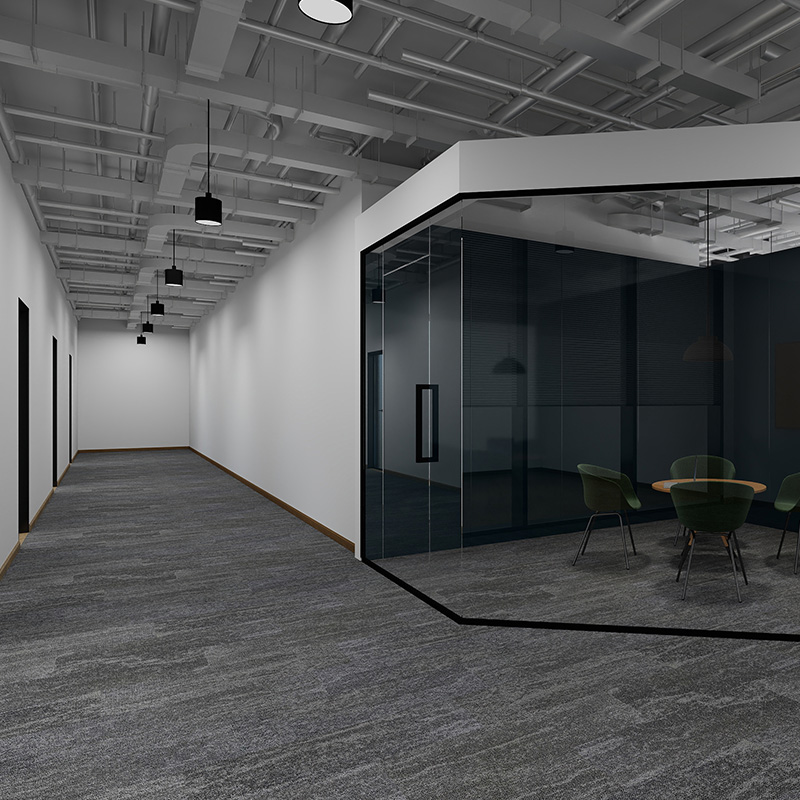
Construction logistics dictate hotel profitability. Every hour a room remains out of order impacts the bottom line.
Closed rooms directly destroy RevPAR (Revenue Per Available Room). A traditional renovation often forces management to shut down entire wings or floors. Installers need vast amounts of open space to unroll, cut, and stretch large textiles. The noise, adhesive odors, and heavy foot traffic make the adjacent areas unrentable. Minimizing this downtime remains a top priority for facility directors.
Modular units provide exceptional logistical agility. Contractors can execute phased installations smoothly. For example, installers can replace one side of a hotel corridor during low-traffic afternoon hours. Guests can safely walk down the other side. You rarely need to displace guests or close entire floors. This flexibility keeps revenue flowing during property upgrades.
Consider the physical challenge of moving materials into a high-rise hotel. Maneuvering heavy, 12-foot broadloom rolls through service elevators creates massive logistical friction. The rolls often exceed elevator cab dimensions. Workers bend or fold the material, which causes permanent creases in the backing. Conversely, modular flooring arrives in compact, easily transportable boxes. Staff simply stack them onto standard luggage carts. They fit easily into any standard passenger elevator if the freight lift breaks down.
A hotel floor must survive relentless physical abuse. Facility managers evaluate materials based on daily resilience and crisis control.
Hotel corridors endure constant heavy rolling traffic. Heavily loaded luggage carts and massive housekeeping trolleys punish the flooring daily. Stretched wall to wall carpet often struggles under this specific stress. The sheer force of the wheels can cause the backing to separate from the face fiber. This delamination leads to unsightly ripples and buckling, which create dangerous trip hazards. Hard-backed modular units resist this sheer stress exceptionally well. They remain firmly anchored to the subfloor under heavy rolling loads.
Spills occur constantly in hospitality settings. Coffee, wine, and cosmetics frequently stain guest room floors. We mentioned spot replacements earlier, but the practical difference merits emphasis. Patching a continuous roll requires an external contractor to cut out the stain, match the pattern perfectly, and hot-seam the new piece. The patch often looks highly visible. With a modular system, an in-house housekeeper simply pops out the ruined square and presses a new one into place. The room returns to inventory in minutes.
Trapped moisture presents a massive liability. Humid coastal hotels or ground-floor properties frequently battle mildew. Traditional stretched flooring utilizes separate foam padding. This padding acts like a sponge, trapping spills and subfloor moisture. Over time, this breeds mold and causes musty odors. Modern modular units often feature breathable or moisture-resistant backings. They allow subfloor vapor to escape safely, mitigating serious odor issues and extending the installation lifespan.
Neither material offers a universal solution for every square foot of a property. Savvy procurement teams utilize a prescriptive, mixed-material strategy. We recommend aligning the product precisely with the specific operational demands of each hotel zone.
Flooring selection dictates how efficiently your property operates over the next decade. Neither material is universally superior across a whole building. Success depends entirely on aligning the product with the specific operational demands of the designated hotel zone.
We advise decision-makers to prioritize modular formats for areas prone to high guest turnover, rolling traffic, and isolated stains. Reserve your continuous roll materials strictly for statement architectural spaces where visual scale matters most. Taking a strategic, zoned approach ensures you maximize both your upfront investment and your long-term aesthetic appeal.
To move forward confidently, we prompt you to request commercial product samples. Consult with a specialized hospitality flooring expert to review your floor plans and finalize the most pragmatic material strategy for your specific property.
A: Advanced cutting techniques and specific patterns (like random ashlar or monolithic installs) can make seams nearly invisible. However, they will never be 100% seamless like broadloom. Strategic pattern selection easily distracts the eye from joint lines in commercial settings.
A: Both can achieve high IIC (Impact Insulation Class) ratings. Broadloom relies on thick, separate underlayment pads. Conversely, modern carpet tiles can be specified with attached acoustic cushion backings. These built-in cushions effectively reduce structural noise transmission between hotel floors.
A: Replacing an entire room of broadloom is significantly more expensive due to specialized labor and the need to move all heavy furniture. Replacing a stained modular tile costs only the price of that single unit and takes housekeeping staff mere minutes.


