

Views: 0 Author: Site Editor Publish Time: 2026-02-07 Origin: Site


Carpet tiles are a popular choice for both homes and businesses, known for their versatility and low maintenance. But can they withstand moisture? Many wonder if carpet tiles are truly waterproof.While they are not inherently waterproof, some carpet tiles are designed to resist water effectively. The key lies in selecting the right backing material, especially for damp environments like basements or entryways.
In this article, we’ll explore how carpet tile backings affect moisture resistance and help you choose the best option for moisture-prone spaces.
The backing of a carpet tile is a crucial element that supports the carpet fibers and impacts its overall performance and durability. It plays a key role in moisture resistance, cushioning, and stability, especially in environments with high humidity or water exposure. Here are some common materials used for carpet tile backing:
● Polyvinyl Chloride (PVC): Offers basic moisture resistance and stability.
● Rubber: Provides excellent water resistance and non-slip properties.
● Gel: Known for superior water resistance and ease of cleaning.
● Closed-Cell Foam: Acts as an impermeable moisture barrier, ideal for damp environments.
Carpet tiles with moisture-resistant backings offer a layer of protection that prevents water from seeping through to the subfloor. For example, a PVC backing may provide some moisture resistance, but prolonged exposure to water could lead to mold or mildew buildup. On the other hand, materials like closed-cell foam are designed to resist water entirely, creating a barrier that keeps moisture from penetrating the carpet tiles.
In areas prone to damp conditions, choosing a carpet tile with the right backing can reduce the risk of water damage and prolong the life of your floor.
Not all carpet tile backings are the same. While standard backings, like PVC, offer basic moisture resistance, they may not be able to withstand high levels of water exposure. Waterproof backings, however, use advanced materials such as thermoplastic or polyolefin compounds to create a non-porous layer that can handle frequent moisture. It’s essential to consider the specific needs of your space when choosing between standard and waterproof backings—whether it’s a residential bathroom or a high-traffic commercial office.
Here’s a comparison of the two types of backings:
Backing Type | Moisture Resistance | Best For | Detail |
Standard Backing (PVC) | Basic moisture resistance | Low to moderate moisture exposure environments | Provides some moisture resistance but not suitable for high water exposure. |
Waterproof Backing | High moisture resistance | High moisture or frequent water exposure areas | Uses non-porous materials for superior water resistance. |
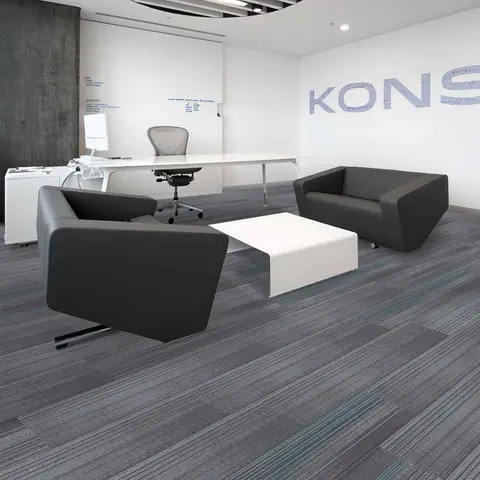
A common misconception about carpet tiles is that they are fully waterproof. In reality, no carpet tile is completely impervious to water. Even with specialized backings, carpet tiles can only resist water to a certain extent.
Carpet tiles with moisture-resistant backings can withstand minor spills and ambient humidity, but prolonged exposure to water—such as flooding or standing water—can still cause damage over time. It’s crucial to understand that the term "waterproof" in the context of carpet tiles typically refers to water-resistant capabilities rather than total water impermeability.
It’s crucial to understand the difference between waterproof and water-resistant carpet tiles. Waterproof carpet tiles are designed with a backing that prevents water from seeping through completely, making them ideal for environments with high moisture levels. Water-resistant carpet tiles, on the other hand, can resist water for a short period, offering protection against minor spills and humidity.
Knowing the differences will help you choose the right carpet tiles for your needs. For spaces with regular moisture, waterproof tiles may be necessary, while water-resistant tiles can work well in less damp environments. Here’s a comparison of waterproof vs. water-resistant carpet tiles:
Feature | Waterproof Carpet Tiles | Water-Resistant Carpet Tiles |
Moisture Protection | Prevents water from seeping through entirely | Resists water for a limited time |
Best For | High moisture or frequent water exposure areas | Areas with occasional spills or humidity |
Suitability | Ideal for high-humidity or wet environments | Suitable for low to moderate moisture levels |
Certain areas of your home or office are more prone to moisture than others. Basements, bathrooms, kitchens, and entryways are all high-risk moisture areas where carpet tiles can face constant exposure to water.
In these spaces, it’s vital to choose carpet tiles that can handle the specific moisture levels they will be exposed to. For example, in basements where high humidity and occasional flooding may occur, waterproof carpet tiles with a sealed backing are crucial to prevent mold growth and water damage.
Even with moisture-resistant carpet tiles, ensuring your subfloor is properly prepared is essential. Moisture can rise from concrete or wood subfloors, potentially causing damage to carpet tiles and their backing.
Before installing carpet tiles in damp areas, test the moisture levels of the subfloor and consider applying a moisture barrier to prevent water infiltration. This step will help maintain the longevity of your flooring and avoid issues like peeling or mold growth underneath the tiles.
When selecting carpet tiles for damp environments, it’s important to weigh the pros and cons of waterproof versus moisture-resistant tiles. Waterproof carpet tiles offer a higher level of protection, making them ideal for areas with frequent water exposure. However, they can be more expensive than moisture-resistant options.
For environments that experience occasional spills or high humidity but not standing water, moisture-resistant carpet tiles may provide sufficient protection. It’s a cost-effective choice that still offers a level of durability against moisture-related issues.
Feature | Waterproof Carpet Tiles | Moisture-Resistant Carpet Tiles |
Best For | High moisture exposure areas | Areas with occasional spills |
Protection Level | Full water resistance | Limited water resistance |
Cost | Higher | Lower |
PVC-backed carpet tiles are a popular choice due to their affordability and decent moisture resistance. While not fully waterproof, PVC provides a level of protection against minor spills and humidity. These tiles are a good option for residential spaces with light moisture exposure.
Rubber and gel backings are often used in environments where slip resistance is also important. These materials offer excellent water resistance and are easy to clean. Ideal for bathrooms or kitchens, rubber and gel backings help to prevent moisture from seeping into the subfloor.
Closed-cell foam backings create an impermeable barrier, making them perfect for areas with high moisture levels, such as basements or areas exposed to frequent spills. Polypropylene backings, made from synthetic fibers, are also highly resistant to moisture and mold, making them a cost-effective solution for damp areas.
Backing Type | Moisture Resistance | Best For |
PVC Backing | Moderate | Residential, light moisture |
Rubber and Gel | Excellent | Kitchens, bathrooms |
Closed-Cell Foam | High | Basements, high humidity |
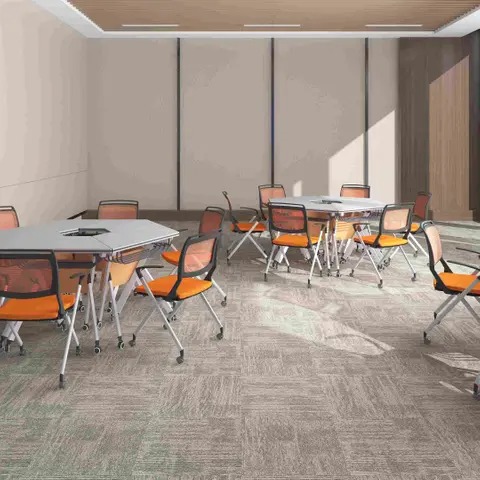
The right adhesive is crucial to maintaining the water-resistant properties of carpet tiles. Moisture-resistant adhesives should be used to prevent the backing from separating over time due to water exposure. Ensuring proper installation, with sealed edges and correct tile placement, is essential to creating a durable, long-lasting flooring solution.
Regular maintenance is key to prolonging the lifespan of carpet tiles in damp environments. Clean up spills immediately to prevent water from seeping into the backing. Use a vacuum to remove dirt and debris that may trap moisture. For high-traffic areas, consider professional cleaning services to maintain the tiles' appearance and functionality.
In commercial spaces like schools, hospitals, and offices, the flooring must withstand heavy foot traffic and occasional water exposure. Waterproof carpet tiles provide a reliable solution, offering both durability and moisture resistance. These tiles are easy to maintain and can be replaced individually if damaged, which makes them ideal for high-traffic environments.
Carpet tiles designed for commercial spaces are built to handle constant wear and tear. With the right backing, they can resist both surface moisture and moisture from below, ensuring they remain intact in environments like entryways or cafeterias. These tiles are a long-lasting solution for businesses concerned with moisture management and flooring durability.
Feature | Waterproof Carpet Tiles | High-Traffic Carpet Tiles |
Best For | High-traffic, occasional water exposure | Constant wear and moisture management |
Moisture Resistance | High | Good |
Replacement Flexibility | Easy to replace individual tiles | Durable, long-lasting |
Carpet tiles are an excellent flooring choice for moisture-prone areas, but selecting the right backing is crucial for durability. While no carpet tile is entirely waterproof, moisture-resistant or waterproof backings provide better protection. Proper subfloor preparation and maintenance ensure long-lasting performance. For both residential and commercial spaces, choosing the ideal backing is key. Hubei Linkun Hongyuan Carpet Corp. offers carpet tiles designed for damp environments, providing high-quality products that deliver long-term value and reliable moisture resistance.
A: Carpet tiles are not entirely waterproof, but some types feature moisture-resistant or waterproof backings, offering protection in damp environments.
A: Look for carpet tiles with waterproof or moisture-resistant backings like PVC or closed-cell foam to ensure durability in areas prone to moisture.
A: PVC, rubber, gel, and closed-cell foam backings are great choices for resisting moisture and preventing water from damaging the carpet tiles.
A: Yes, carpet tiles with moisture-resistant or waterproof backings are ideal for high-humidity areas like basements or bathrooms.
A: Yes, proper subfloor preparation and moisture-resistant adhesives are necessary when installing carpet tiles in damp areas to ensure long-term durability.
A: Hubei Linkun Hongyuan Carpet Corp. offers high-quality carpet tiles with moisture-resistant backings, perfect for damp environments.


