

Views: 0 Author: Site Editor Publish Time: 2026-11-19 Origin: Site


Two carpet swatches can show the same fiber and backing on the label and feel completely different underfoot. Put them in a busy corridor and the differences can matter more. Pile height and structure affect the surface a luggage wheel rolls over, while the backing and installation system affect how the carpet is secured to the floor. To choose wall to wall carpet, start with what happens in the space each day. Then compare the fiber, pile, and backing as a combination, and ask for evidence that the specific product suits your traffic and maintenance conditions.
Identify the most demanding route across the floor. Shortlist a surface that suits that traffic, then check the backing and installation method together. If two products still look similar on paper, compare their exact use classifications, test information, and physical samples.
Traffic is a combination of volume, concentration, and the kind of movement the carpet sees. A meeting room may fill twice a day, with people spreading across several aisles. A narrow office corridor can carry fewer people overall while funneling nearly all of them through the same strip. A lift lobby adds turning wheels and repeated changes of direction. Those areas may be described as busy, but they place different demands on the carpet.
Watch how people and equipment use the floor. Record the busiest routes, whether the wheels carry a load, and where staff turn or stop. Note areas with outside soil, frequent spills, or repeated cleaning. A corridor next to an exterior entrance may need a different shortlist from an interior corridor where the main issue is recurring cart traffic.
Ask whether the most demanding use covers the entire floor or a short stretch. In an office, the path from the lift to reception may wear differently from the desks on the same floor. A hotel may have one corridor used by housekeeping carts and a different route for banquet equipment. A map of those routes makes it easier to decide where to use the same wall to wall carpet and where to specify a separate product or a planned transition.
Separate everyday traffic from occasional events. A loaded delivery trolley that crosses the carpet twice a month can still matter if it uses one tight turn or crosses the same threshold every time. Tell the supplier which equipment represents ordinary use and which represents the heaviest planned use. If the operator can route that equipment over another surface, mark that change before selecting the carpet.
Describe the exposure in the request for quotation. Ask bidders to explain the product’s suitability for that use and identify any limits. If the specification depends on a traffic classification or performance test, record the classification system and test method. General phrases such as commercial grade are useful as a starting filter, while project approval needs a precise product reference and supporting information.
Compare fibers by the problem the space is most likely to face. If the carpet runs through a narrow corridor, appearance after repeated compression may be a priority. If it goes into guest rooms, underfoot feel and how quickly housekeeping can address a spill may matter more. The fiber gives the shortlist a direction. Construction, dye method, treatments, and the care routine can change how the finished carpet behaves.
Fiber | Why it might make the shortlist | What to verify for the actual product |
|---|---|---|
Nylon | Often considered when pile recovery and appearance retention are priorities | Traffic classification, dye method, cleaning restrictions, and appearance test evidence where available |
Polypropylene (PP) | Can be considered where budget and cleaning requirements suit the construction | Compression recovery in concentrated routes and cleaning guidance for oily soil |
Polyester (PET) | Often considered for soft finishes or areas where comfort is a priority | Appearance retention in the expected traffic lane and suitability for the maintenance schedule |
Wool and wool blends | May suit projects that value hand, texture, and a particular finish | Blend ratio, product care instructions, and how the product is classified for the proposed use |
Ask separate questions about stain removal and wear. A product can respond well to a particular spill yet develop a visibly flattened path under repetitive traffic. Likewise, a dense carpet can retain its texture and still need a maintenance plan suited to the soil brought in at an entrance. If cleaners use a specified process, give the supplier the method and ask whether it is compatible with the shortlisted carpet.
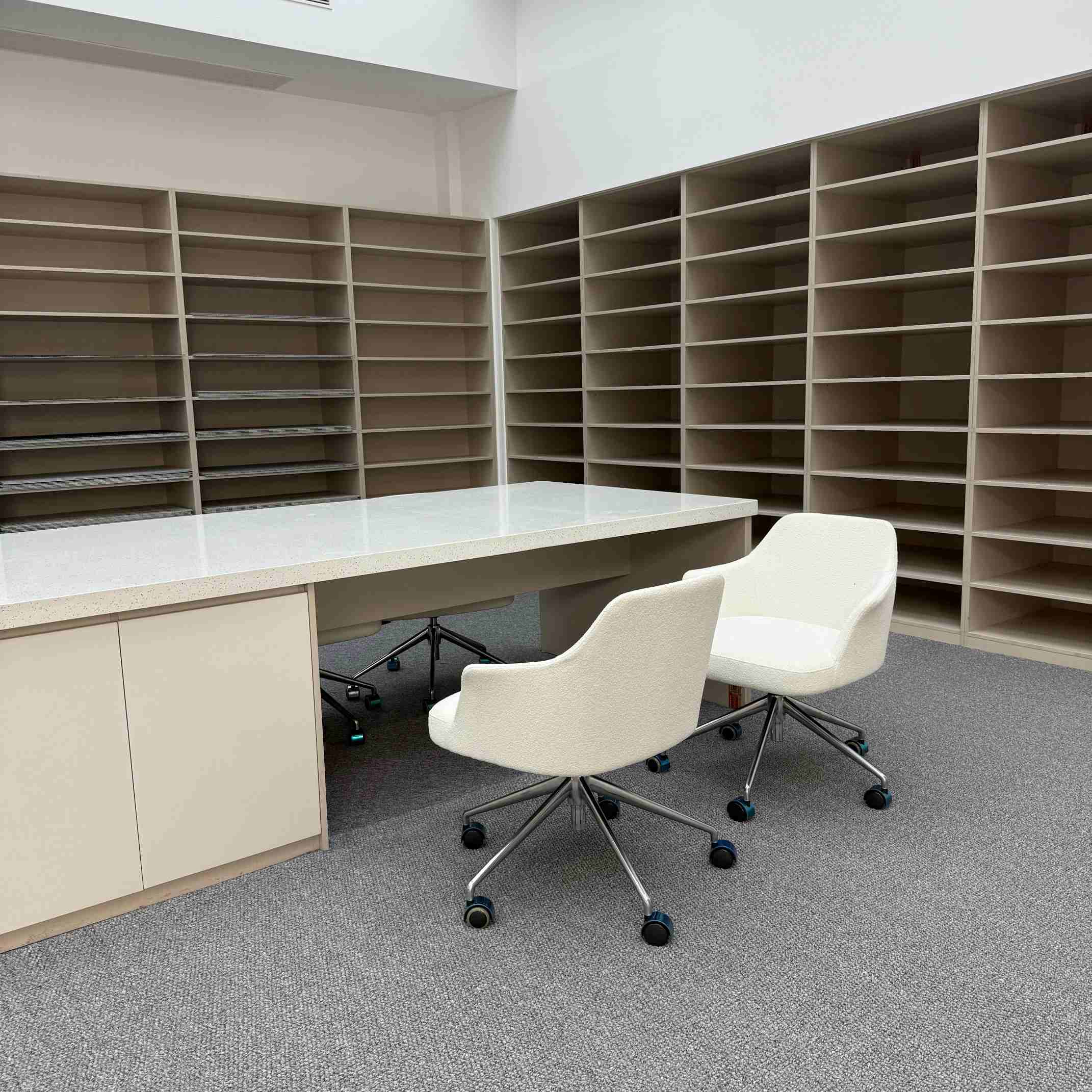
In loop pile, the yarn forms loops at the surface. A level loop has an even profile, while a multi-level loop uses different heights to create texture. Cut pile has cut yarn ends and can give a fuller feel, depending on its height and construction. Cut-and-loop designs combine both structures. For busy routes, compare how the surfaces respond to pressure and cleaning as well as how they look when new.
Roll a representative piece of equipment over an installed sample when wheeled use matters. A loose swatch can show texture and color, but it cannot reproduce the resistance of an installed carpet and cushion. Check for snagging exposure around sharp or damaged equipment, especially with loop products, and ask how the manufacturer recommends handling that risk.
Face weight is the mass of the surface pile yarn per unit area. Total weight also includes components such as the backing. A heavier face weight can reflect more yarn, while pile height and yarn distribution determine how that mass is arranged. Compare weights on the same measurement basis, then read them alongside the pile height, density information, and available performance data. A tall and a short pile can carry similar yarn weight and still feel quite different under a wheel.
Look at the same sample from both ends after viewing it flat. Directional pile can shift in appearance with the angle of view. If the project connects a corridor and a room or uses different carpets side by side, lay the samples in the directions they will actually run. That review can reveal a contrast that was hard to see when the swatches were held upright.
To compare a short, compact surface with a more textured one, ask the supplier for the actual pile measurements and note whether the height changes across the surface. This helps the installer anticipate transitions and helps the operator judge whether the carpet fits the expected cleaning and equipment routes.
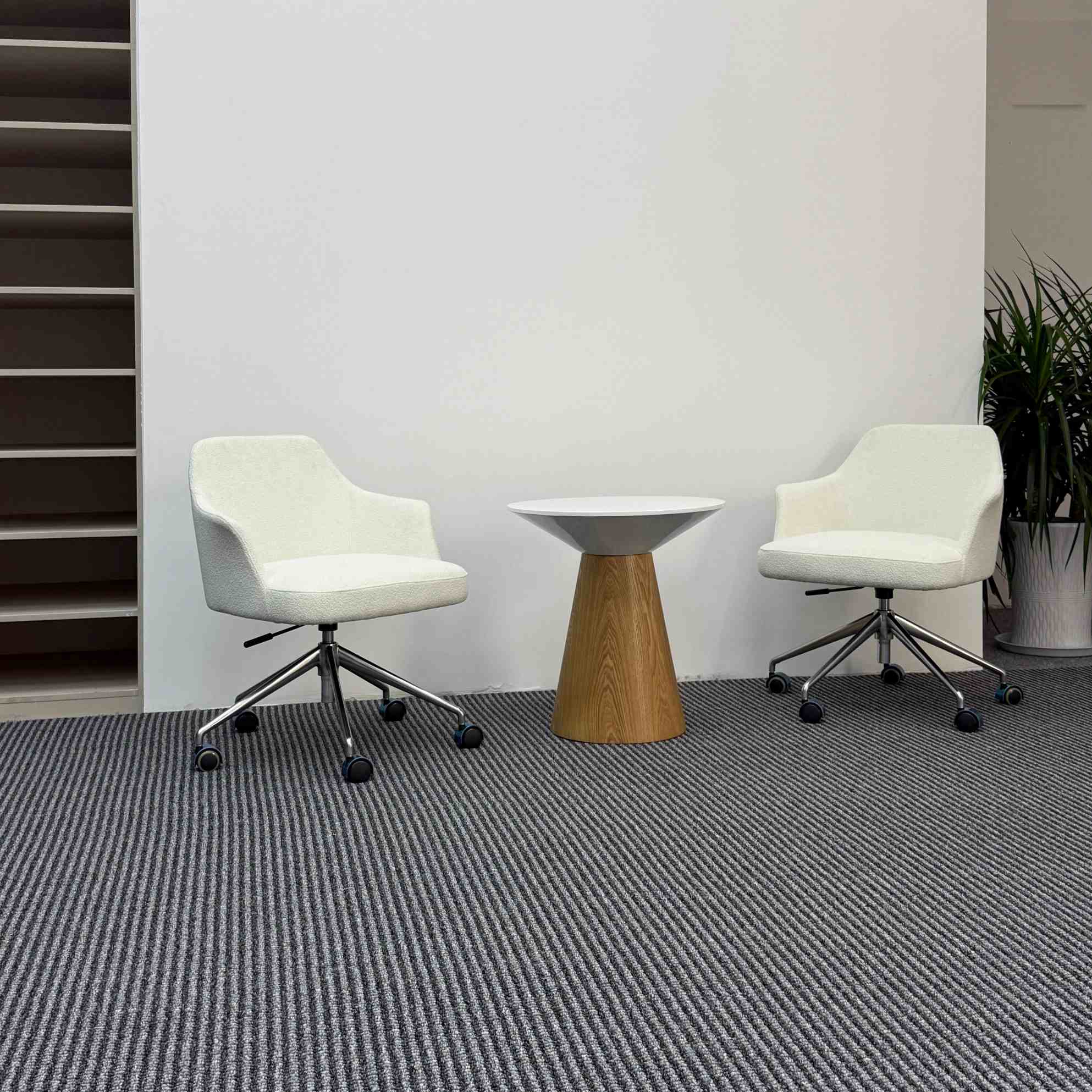
The backing forms part of the carpet construction. In a tufted product, the primary backing holds the inserted yarn during manufacture and the completed backing system helps support the finished structure. A separate pad, also called a cushion or underlay, is a different component installed beneath the carpet when the approved system calls for it. An attached cushion comes as part of the carpet assembly.
The proposed installation method determines which components to compare. A direct-glue system bonds the approved carpet to the prepared substrate with a compatible adhesive. A double-glue system uses a compatible cushion bonded to the substrate and carpet bonded to that cushion. Stretch-in uses a perimeter fastening system and a separate cushion. Ask the manufacturer and installer to confirm the permitted method and exact materials for the intended traffic and substrate.
If the project needs more underfoot comfort or sound control, compare the complete assembly. A thick or soft cushion changes how the surface feels under wheels and near transitions. Ask for supporting assembly information if acoustic performance is part of the specification. Check the combined thickness at doors, threshold strips, and adjacent finishes before selecting a system.
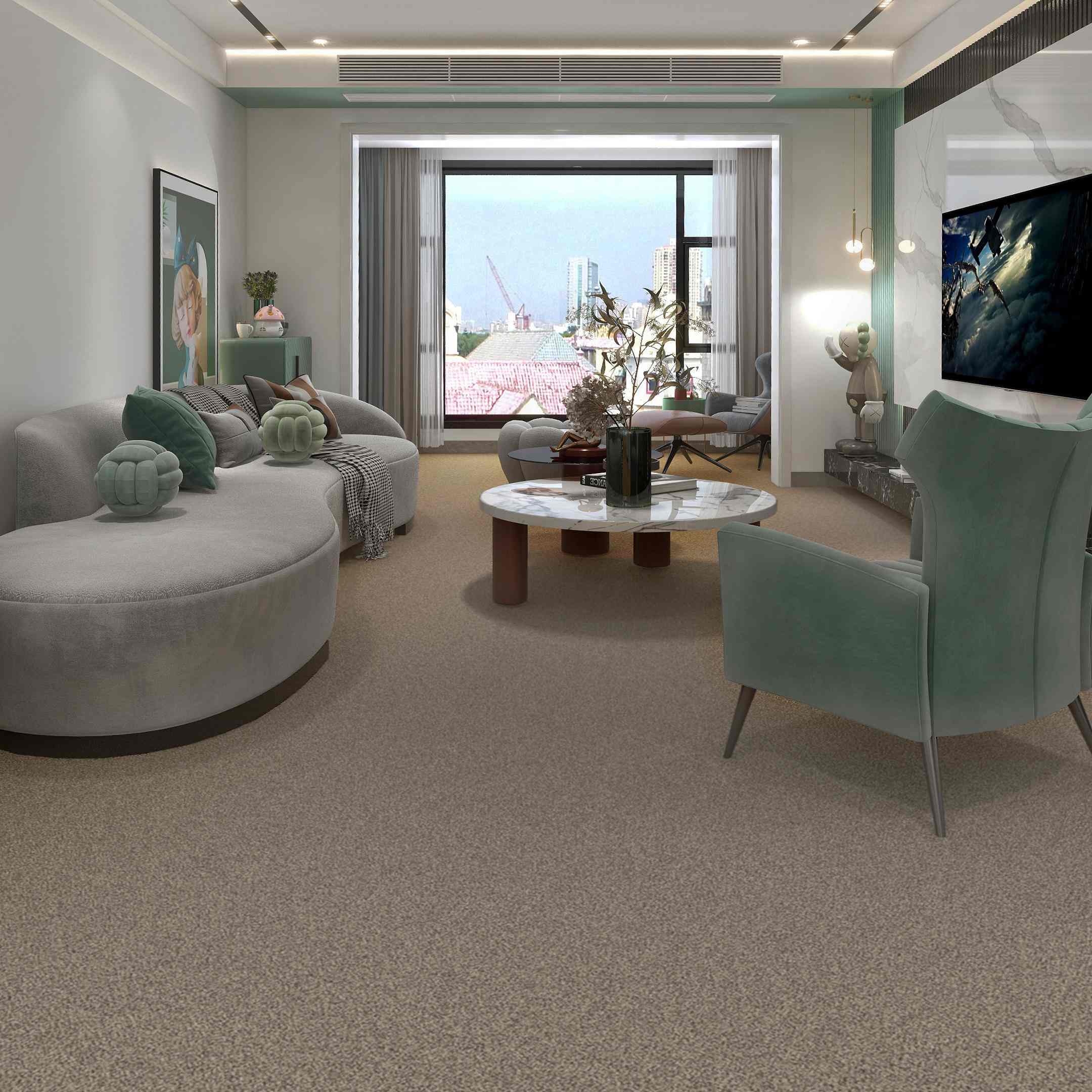
Compare LKHY’s Eudora Multi-Level Loop Carpet with its Alice PP Cut-Pile Carpet. Both are 4 m polypropylene broadloom products with Action Back. Eudora has a multi-level loop surface with listed pile heights of 7/3 mm. Alice has a cut pile with a listed height of 15 ± 1 mm and is intended for spaces such as hotel guest rooms. Their common fiber and backing narrow the comparison to more specific questions about surface profile, use, and the installed system.
Use condition | First question to ask | What to verify |
|---|---|---|
Guest room with ordinary foot traffic | Does the surface provide the intended feel and appearance? | Installed sample, housekeeping instructions, and transition height |
Corridor with wheeled luggage | How will the surface behave along the main rolling route? | Product suitability for the traffic and the approved backing and fixing method |
Lift lobby with frequent turns | Can the proposed surface and layout accommodate repeated turning? | Traffic documentation, layout review at the turn, and a representative trial where warranted |
Office access route with tracked-in soil | How will the carpet be kept presentable between cleans? | Care instructions, entrance matting plan, and a sample viewed under installed lighting |
Use a short scorecard to record what is confirmed, what still needs an answer, and who will make the decision. If two candidates meet the stated traffic conditions, compare practical details such as the transition height, roll layout, and cleaning method. If a requirement depends on a particular assembly, keep that assembly attached to the scorecard so the approved carpet and cushion cannot be separated by mistake.
Ask each bidder for the same set of information. The product name and version should match across the sample, technical data, and quotation. If test data are supplied, check that the result applies to the product or assembly being offered and that the methods are comparable. If a result is missing, ask what the supplier can provide for the project’s actual use, such as a written suitability statement or a representative installed sample for assessment.
Choose wall to wall carpet by working from the most demanding regular use back to the product specification. A short, concentrated traffic lane or frequent turns can change the selection even when the rest of the floor sees light use. When comparing products from carpet manufacturer LKHY, carry the exact model, pile profile, and backing through to the installation and maintenance review. If two styles appear similar on a price sheet, use the measured pile details, the manufacturer’s application guidance, and a sample of the intended assembly to decide which one better fits the space.
It describes how color is introduced. Pigment is incorporated before the synthetic fiber is formed. Ask for the fiber type and dye method separately, and follow the cleaning guidance for that product.
Yes. Pile height, structure, yarn, and density can differ. For cart routes, compare the finished assemblies and ask about the exact wheeled use expected.
It can be compared as a measurement if the units and basis match. For selection, read it alongside pile height, construction, and performance information.
Request an exact model data sheet, applicable test methods and results if available, installation and maintenance instructions, and written guidance for the expected type of traffic.


