

Views: 0 Author: Site Editor Publish Time: 2026-09-17 Origin: Site


Approving a floor covering document represents a massive CapEx decision for any hotel property. It directly impacts your ongoing operational expenditures, strict brand standards, and the overall guest experience. Too often, owners leave technical details entirely to design teams. This creates severe blind spots. A poorly vetted choice often leads to premature wear in high-traffic zones. You might easily fail compliance during a rigorous Property Improvement Plan (PIP) audit. Worse, manufacturers will void your warranties if daily maintenance protocols clash with the selected materials.
We built this guide to close those dangerous gaps. We provide hotel owners and investors an evidence-based, skepticism-friendly evaluation framework. You will learn exactly how to audit these complex documents rigorously before your final sign-off. Protect your investment, ensure long-term durability, and secure your brand reputation from day one.
Owners often focus heavily on bold patterns and brand colors. However, long-term durability relies entirely on technical construction. You must look past aesthetics. Check the density factor and face weight first. High traffic zones require extremely high density. A deeper pile never guarantees longevity. If fibers lack density, they crush under foot traffic quickly. Crushed fibers reflect light differently, creating permanent "wear patterns" in your lobbies.
Next, review yarn composition realities closely. Solution-dyed nylon offers superior colorfastness. Manufacturers inject the color directly into the polymer before extruding the fiber. This means the color goes all the way through. It resists harsh stains effectively. Housekeeping can even use aggressive bleach solutions to clean it. Wool blends offer luxurious textures instead. They work beautifully in premium suites. However, nylon performs much better in busy corridors.
Backing systems matter just as much as the face yarn. The backing must match your specific subfloor conditions. Heavy rolling loads stress the flooring daily. Think of bellman carts, heavy luggage, and maintenance equipment. An inadequate backing leads directly to delamination. Delamination occurs when the primary and secondary backings separate entirely. The flooring then bubbles and buckles. This creates severe tripping hazards for guests.
Finally, lock down your choices aggressively. A watertight carpet specification prevents cheap downgrades. Ensure the document clearly states "no equals or substitutions without written owner approval." Contractors often try to boost their margins. They might suggest a cheaper alternative just before installation. This specific clause protects your property against value-engineering degradation.
Different hotel zones face entirely distinct operational realities. Traffic volume heavily dictates your material selection. You cannot use a one-size-fits-all approach across an entire property.
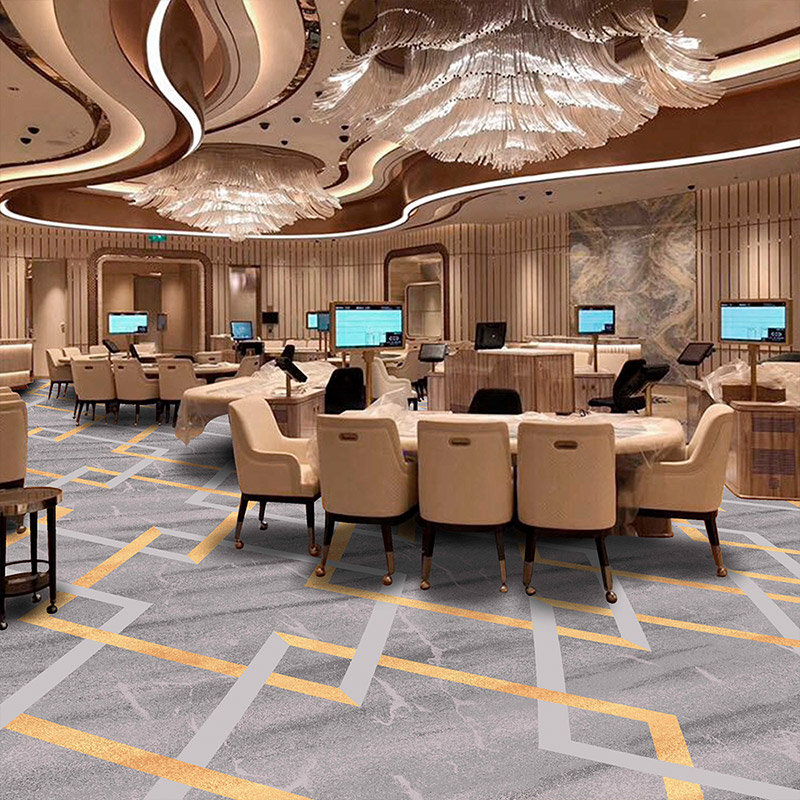
In public spaces and grand lobbies, structural integrity remains paramount. Evaluate the necessity of woven Axminster carpet. It provides exceptional pattern longevity. Its heavy commercial rating withstands constant, aggressive foot traffic. The woven construction physically locks every single yarn into the backing. This prevents yarns from pulling loose over time. Axminster handles the extreme abuse of thousands of daily footsteps effortlessly.
Corridors and high-spill zones require highly strategic thinking. Assess the use of modular commercial carpet tiles versus traditional broadloom. Tiles allow for easy localized replacement. When a guest spills red wine, housekeeping simply swaps the stained tile. You do not need to patch a massive roll. Ensure the spec includes a high-quality acoustic underlayment. Quiet corridors drastically improve guest sleep quality. Sound transmission remains a top source of negative guest reviews.
Guest rooms demand a very delicate balance. Guests expect a plush underfoot feel. Yet, housekeeping teams face strict daily maintenance realities. Ensure the pile height stays reasonable. Thick piles can impede door clearances badly. Doors dragging across the floor ruin both the door bottom and the fibers.
Hotel Zone Material and Construction Matrix
| Hotel Zone | Recommended Material | Key Performance Metric | Primary Maintenance Strategy |
|---|---|---|---|
| Lobbies & Public Spaces | Woven Axminster | High pile density, structural lock | Daily vacuuming, annual hot water extraction |
| Corridors | Modular Tiles (Nylon) | Acoustic rating, stain resistance | Localized tile replacement for heavy stains |
| Guest Rooms | Broadloom (Cut Pile) | Underfoot comfort, ADA height limits | Standard vacuuming, spot treatment |
Legal requirements are strictly non-negotiable. They are never optional upgrades. You must audit every document for full compliance. Ignoring these codes exposes owners to massive financial liabilities.
First, verify fire and safety codes carefully. The document must explicitly meet critical flammability standards. Local fire marshals and brand PIP guidelines usually demand the ASTM E648 Radiant Panel Test. This test measures how a material contributes to flame spread in corridors. A failure here halts your entire renovation immediately. Inspectors will force you to rip up installed floors. Always demand written proof of Class 1 testing before approving any orders.
Second, prioritize environmental and air quality markers. Look for required carpet certification marks. Programs like Green Label Plus guarantee low VOC emissions. Volatile Organic Compounds cause off-gassing, creating an unpleasant "new chemical" smell. This certification protects indoor air quality for your guests and staff. It prevents respiratory irritation. Furthermore, these certifications align perfectly with modern corporate sustainability goals. Many large corporate clients now demand eco-friendly venues.
Third, double-check ADA compliance thoroughly. The specified pile thickness and padding combination must remain compliant. They cannot exceed ADA maximum vertical transition limits. This limit is typically 1/2 inch from the subfloor to the top of the pile. Anything higher creates a dangerous tripping hazard for wheelchairs and walkers. Transition strips between bathrooms and sleeping areas frequently fail this test. Measure the uncompressed pile height carefully before signing off.
Bespoke designs elevate a hotel's brand identity significantly. They create highly memorable spatial experiences. However, they introduce unique supply chain and installation risks. You must manage these risks proactively.
When dealing with a custom carpet specification, always mandate a physical "strike-off" process. A strike-off is a small prototype sample manufactured for your direct review. You must include an approval step for this inside your contract. It allows you to verify color accuracy under your hotel's specific lighting conditions.
Here are the critical steps for a successful strike-off review:
Next, evaluate pattern match and waste factors. Review the pattern repeat dimensions carefully. Large geometric patterns require significantly more overage during installation. Installers waste material continually to align the patterns perfectly at the seams. If they miscalculate, the design looks distorted. This extra waste directly impacts your final budget. Always ask the manufacturer for a detailed seaming diagram.
Finally, confront supply chain realities honestly. Cross-check the stated manufacturing and shipping lead times. Compare them directly against your property's renovation schedule. Always define financial penalty clauses for late delivery. Material delays halt other trades, causing a massive domino effect. Every delayed room costs you lost nightly revenue.
A warranty only protects you if it remains legally valid. Many owners discover voided warranties only after a major failure occurs. You must stress-test these documents against your real-world daily operations.
Scrutinize the fine print relentlessly. Manufacturers often include incredibly strict maintenance clauses. Warranties are frequently voided due to minor installation or cleaning errors. You must ensure the new flooring aligns perfectly with your existing housekeeping standard operating procedures (SOPs).
Watch out for these common warranty-voiding mistakes:
Attic stock requirements act as another critical safeguard. Verify your spec mandates a 5% to 10% attic stock order. This surplus material provides inventory for future patch repairs. It must come from the exact same dye lot as the original order. Textile manufacturing involves slight chemical variations between batches. If you order replacements later, the colors will never match perfectly. You will see an obvious patched square in your hallway. Store this stock in a climate-controlled environment to prevent backing degradation.
Treat your floor covering documentation as a strict legal risk-mitigation tool. It serves as far more than just a creative design vision. Approving these documents requires deep technical skepticism and long-term operational foresight.
Take these immediate steps to secure your investment:
Taking command of these technical nuances ensures your renovation stays on track. Your property will maintain its strict brand standards and perform beautifully for years.
A: The lifespan varies heavily by zone and material quality. A well-specified guestroom option typically lasts 5 to 7 years before showing significant wear. Heavy-traffic corridors generally require replacement every 3 to 5 years. Selecting high-density fibers and adhering to strict daily maintenance schedules will maximize this lifespan.
A: Property Improvement Plans mandate certifications to enforce brand standards and ensure strict environmental compliance. Certifications like Green Label Plus verify low VOC emissions, ensuring healthy indoor air quality. Meeting these standards reduces the hotel's liability risks and maintains brand consistency across different franchise locations.
A: The industry standard dictates ordering 5% to 10% in attic stock. You should weigh this percentage based on pattern complexity. Large geometric patterns require closer to 10% due to matching constraints at the seams. Always ensure this surplus originates from the exact same dye lot to guarantee seamless future repairs.
A: Yes, but you must do it highly strategically. Reducing the face weight slightly is much safer than downgrading the yarn material or backing quality. Never compromise on fiber density or subfloor compatibility. A highly dense, lower-weight nylon outperforms a loosely packed, heavy polyester every single time.


