

Views: 0 Author: Site Editor Publish Time: 2026-01-20 Origin: Site


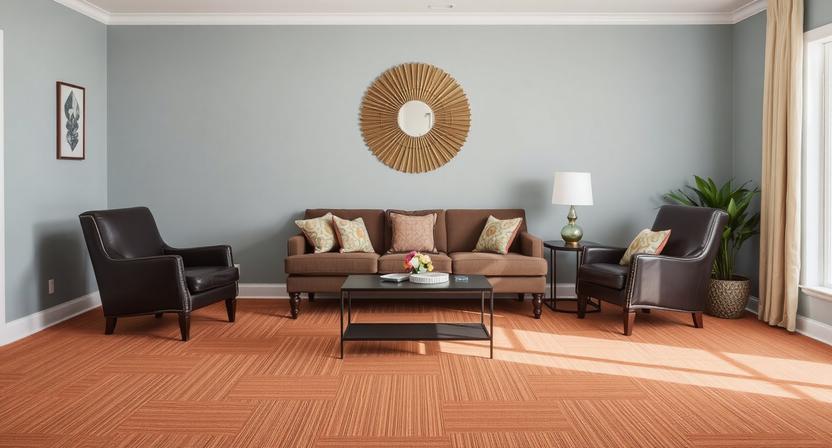
Choosing the right flooring for your space can be challenging. Carpet tiles and Luxury Vinyl Plank (LVP) each offer distinct advantages. But how do you decide which one is best for your home or office?
In this article, we will compare carpet tiles and LVP, discussing their pros, cons, and costs. By the end, you'll have a clear understanding of which flooring option suits your specific needs.
Carpet tiles are modular flooring made of square pieces, offering flexibility in design and color. They are softer and warmer than most flooring types, making them great for comfort in areas like bedrooms and living rooms. The modular design also allows easy replacement of individual tiles for better maintenance. Below is a summary of the key features:
Feature | Details |
Modular Design | Made up of square pieces, enabling simple installation and replacement of individual tiles. |
Variety in Designs | Available in a wide range of designs, textures, and colors, offering flexibility for customization. |
Comfort and Warmth | Provides a soft, warm surface that enhances comfort, particularly in bedrooms and living areas. |
Easy Maintenance | Allows for the easy replacement of individual tiles, simplifying maintenance and repairs. |
● Comfort and Warmth: Carpet tiles are soft underfoot, making them ideal for living rooms and bedrooms where comfort is key.
● Sound Absorption: Their dense pile helps reduce noise, making them perfect for multi-story homes or offices where noise control is important.
● Ease of Maintenance: Carpet tiles allow for easy spot replacements. If one tile is stained or damaged, you can swap it out without replacing the entire floor, which saves time and money.
● Shorter Lifespan: Carpet tiles typically last between 8 to 10 years, which is shorter than LVP’s average lifespan.
● Moisture Sensitivity: Carpet tiles are not ideal for areas with high humidity or frequent spills, such as basements and kitchens, as they can absorb moisture and lead to mold.
● Cleaning Challenges: While regular vacuuming keeps carpet tiles looking fresh, they require more maintenance than LVP, such as deep cleaning to remove embedded dirt and stains.
The initial cost of carpet tiles is relatively low, ranging from $2 to $8 per square foot. However, while installation is affordable, the long-term costs can rise, especially in high-traffic areas. Frequent cleaning and potential replacements add to the overall maintenance cost over time.
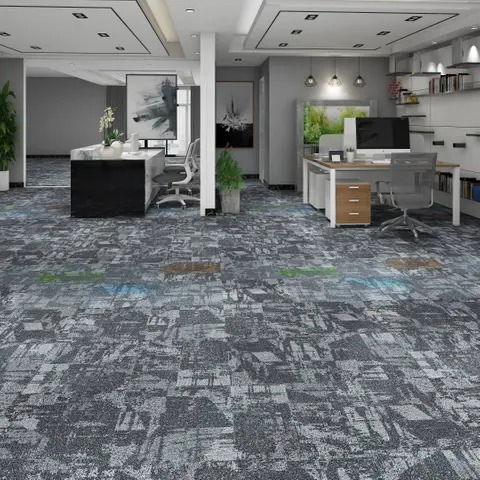
LVP (Luxury Vinyl Plank) is a hard-surface flooring that closely resembles natural materials like wood and stone. However, it stands out with superior durability and water resistance, making it a great option for both homes and businesses. It's especially practical for areas where easy maintenance and reliable flooring are a must. Below is a summary of its key features:
Feature | Details |
Hard Surface | A durable, rigid flooring option that provides strong resistance against wear and tear. |
Mimics Natural Materials | Designed to resemble wood or stone, offering an elegant look at a fraction of the cost. |
Water Resistance | Superior water resistance, making it ideal for high-moisture areas like kitchens and bathrooms. |
Low Maintenance | Easy to clean and maintain, requiring only basic sweeping and mopping to keep it looking good. |
● Durability and Long Lifespan: LVP can last 15-20 years or more, making it a long-term investment. It resists wear and tear from heavy foot traffic, pets, and furniture.
● Waterproof: Perfect for moisture-prone areas such as kitchens, bathrooms, and basements. LVP will not warp or deteriorate when exposed to water, making it an excellent choice for these environments.
● Low Maintenance: LVP is easy to clean—just sweep or mop it regularly. It doesn’t require professional cleaning, which saves on maintenance costs.
● Design Versatility: LVP is available in various styles, often resembling real wood or stone, but at a fraction of the price. It offers the flexibility to match any décor while maintaining durability.
● Harder Underfoot: LVP lacks the softness and warmth of carpet tiles. This can make it feel colder and harder underfoot, particularly in living areas where comfort is a priority.
● Higher Initial Cost: LVP typically costs more to install than carpet tiles, ranging from $4 to $16 per square foot, depending on the quality and installation requirements.
● Repair Complexity: While durable, LVP can be challenging to repair. If a plank is damaged, it may require replacing the entire piece, unlike carpet tiles that can be replaced individually.
Though LVP comes with a higher initial price tag, it provides excellent long-term value. Its durability and minimal maintenance requirements make it a cost-effective solution in the long run. Additionally, its resistance to stains, scratches, and moisture means it won’t need to be replaced as frequently as carpet tiles.
Carpet tiles are far superior to LVP in terms of comfort. They offer a soft, plush feel underfoot, making them perfect for areas like bedrooms and living rooms where warmth and coziness are important. LVP, while durable and practical, is harder and can feel cold, making it less suitable for spaces where comfort is a primary consideration.
LVP takes the lead when it comes to durability. Its water resistance and ability to withstand heavy traffic make it a go-to choice for high-traffic areas, kitchens, and bathrooms. Carpet tiles, on the other hand, may wear out faster and require more frequent maintenance, especially in high-traffic or moisture-prone spaces.
Carpet tiles are typically cheaper to install initially, but their need for more maintenance, repairs, and replacements over time can lead to higher overall costs. LVP, though more expensive upfront, offers a better return on investment due to its long lifespan and minimal maintenance requirements.
● Carpet Tiles: Best for bedrooms, formal living rooms, and offices where comfort and budget are the priorities.
● LVP: Ideal for high-traffic areas, kitchens, bathrooms, and basements where durability, water resistance, and easy maintenance are needed.
Feature | Carpet Tiles | LVP |
Comfort & Warmth | Soft and cozy, ideal for bedrooms | Harder surface, less warmth |
Durability & Maintenance | Requires more maintenance over time | Highly durable, low maintenance |
Cost | Lower upfront cost, higher long-term | Higher upfront cost, better ROI |
Best for | Bedrooms, living rooms, offices | High-traffic areas, kitchens, bathrooms |
The upfront cost of carpet tiles is lower, making it an attractive option for those with a tighter budget. However, the savings in the short term can be offset by the higher maintenance costs in the long run.
While LVP may have a higher initial cost, its durability, ease of maintenance, and resistance to water and stains make it a more economical choice in the long run. It’s less likely to need replacement, saving you money over time.
Aspect | Carpet Tiles | LVP |
Initial Cost | Lower upfront cost | Higher initial cost |
Long-Term Value | Higher maintenance costs over time | More durable, lower long-term costs |
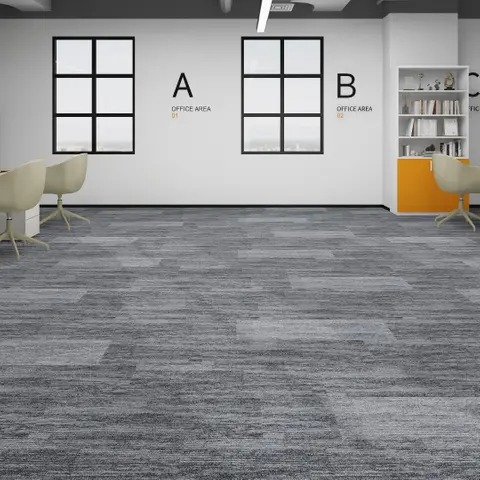
When deciding between carpet tiles and LVP, it's important to consider the specific needs of your space. Below is a summary of when each option is ideal:
Flooring Option | Ideal For | Not Ideal For |
Carpet Tiles | Bedrooms, formal living rooms, offices (comfort & budget) | Moisture-prone or high-traffic areas (kitchens, bathrooms, basements) |
LVP | High-traffic areas, kitchens, bathrooms, basements | Low-traffic, comfort-focused areas (like bedrooms) |
Both carpet tiles and LVP have unique advantages depending on your space. Carpet tiles offer comfort and warmth, ideal for low-traffic, moisture-free areas like bedrooms and offices. LVP, on the other hand, excels in durability, water resistance, and easy maintenance, making it suitable for high-traffic and moisture-prone areas such as kitchens, bathrooms, and basements.
If comfort and budget are your priorities for low-traffic areas, carpet tiles are the right choice. For better durability, water resistance, and long-term value, LVP is the superior option. Hubei Linkun Hongyuan Carpet Corp. offers high-quality carpet tile solutions that combine comfort and performance for various spaces.
A: Carpet tiles are modular flooring pieces that come in various colors and patterns. They are soft, warm, and easy to replace individually, making them ideal for areas like bedrooms and living rooms.
A: LVP is a hard-surface flooring that mimics wood or stone, offering superior durability and water resistance. Carpet tiles, in contrast, are softer and warmer but may wear out faster in high-traffic areas.
A: Carpet tiles are better for low to moderate traffic areas. They provide comfort but may not hold up as well under heavy foot traffic compared to LVP.
A: Carpet tiles generally cost less to install initially ($2–$8 per sq. ft.), while LVP costs more ($4–$16 per sq. ft.). However, LVP offers better long-term value due to its durability.
A: Carpet tiles are ideal if you prioritize comfort, warmth, and budget. They are perfect for bedrooms and living rooms where a cozy, quiet atmosphere is important.
A: Yes, LVP is highly water-resistant, making it a great option for kitchens, bathrooms, and basements where moisture exposure is common.


